Turn on cookies to sign in
Signing in saves your progress to your Curie account. We can only do that with cookies on — turn them on to continue.
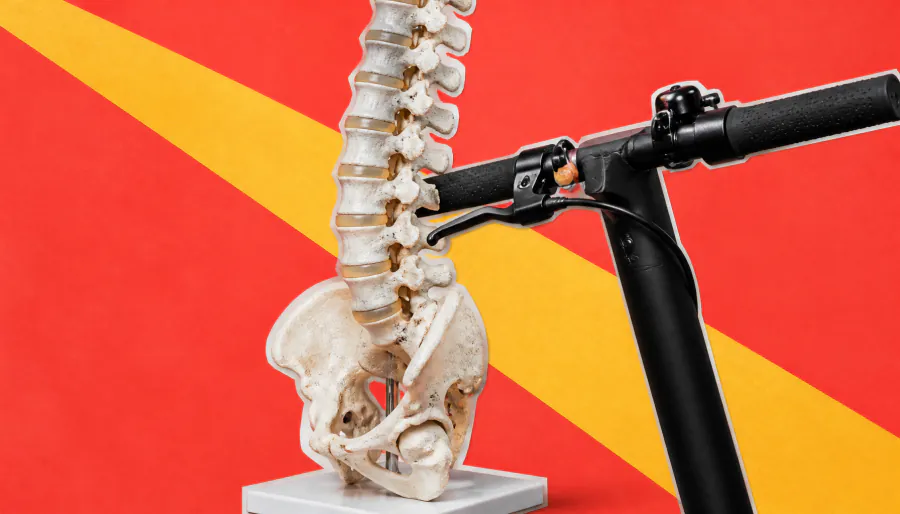
As electric scooters, hoverboards, and e-bikes become more popular, spine injuries are surging. A new study found an eightfold increase in micromobility-related spine injuries between 2015 and 2024, with men and older adults hit hardest. Experts are calling for stronger safety regulations, better infrastructure, and manufacturer accountability to keep pace with the rapid adoption of these devices.
The rise of electric micromobility — think e-scooters, hoverboards, e-skateboards, and e-bikes — is coming with a costly side effect: a surge in serious spine injuries. A large database study analyzing nearly 2,700 patients found a steady and dramatic upward trend in spine injuries linked to these devices, with men and older adults bearing the brunt of the impact.
Researchers pulled data from the National Electronic Injury Surveillance System and found that fractures and contusions or abrasions were the most common injuries, followed by sprains and strains. The trend cut across all demographics — men, women, all age groups, and all device types — suggesting the problem is driven by sheer growth in device adoption rather than any single risk factor.
By the Numbers:
Why it matters: Experts are urging orthopedic societies, the CDC, and local public health agencies to treat micromobility safety the way we treat car safety — with engineering standards, infrastructure investment, and clear regulations. Pediatric providers are also being encouraged to add e-scooter safety to routine anticipatory guidance, much like car-seat and bicycle safety counseling.