Turn on cookies to sign in
Signing in saves your progress to your Curie account. We can only do that with cookies on — turn them on to continue.
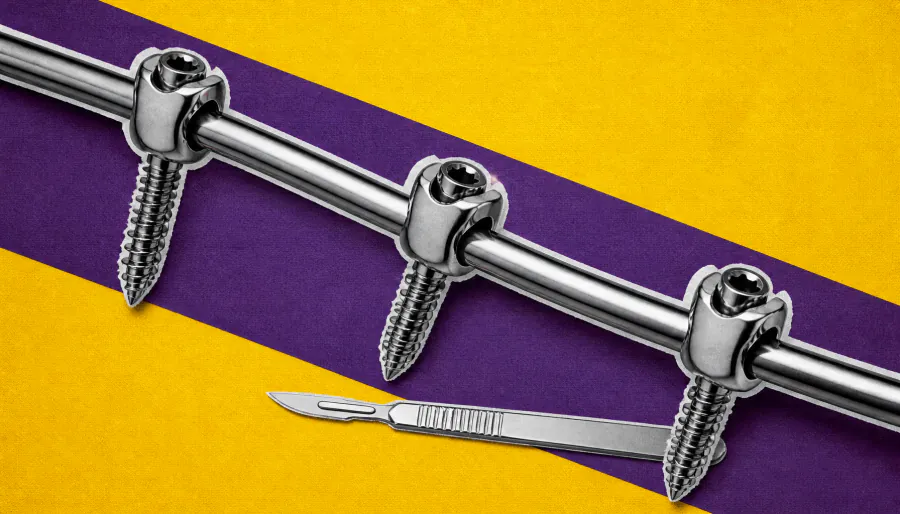
A new systematic review suggests that posterior column osteotomies may be unnecessary for many adolescents with scoliosis. Among 2,108 patients with Lenke type 5 adolescent idiopathic scoliosis, adding the osteotomy to spinal fusion didn't produce significantly better outcomes across most measurements. Experts say the findings support a more personalized, patient-by-patient surgical approach.
A new systematic review is challenging the routine use of posterior column osteotomies (PCOs) in adolescent scoliosis surgery. Researchers analyzed 35 studies covering 2,108 patients with Lenke type 5 adolescent idiopathic scoliosis (AIS) who underwent posterior spinal fusion — with or without a PCO. The bottom line? Adding the osteotomy didn't lead to significantly better results across most radiographic measures.
While the PCO group showed slightly higher thoracolumbar/lumbar Cobb correction (79.22% vs. 74.07%), no significant differences were found in any other spinal measurements, including coronal balance, lumbar lordosis, or sagittal alignment. Lead researcher Dr. James D. Lin of Mount Sinai Hospital noted that osteotomies remain a "powerful technique," but may not be warranted in every case — especially depending on curve patterns, apex location, and bone quality.
By the Numbers:
Why it matters: As spine surgery moves toward personalized care — think custom-bent rods tailored to each patient — this study adds evidence that surgical plans should be individualized. Avoiding unnecessary osteotomies could reduce procedural complexity without compromising outcomes for many AIS patients.