Turn on cookies to sign in
Signing in saves your progress to your Curie account. We can only do that with cookies on — turn them on to continue.
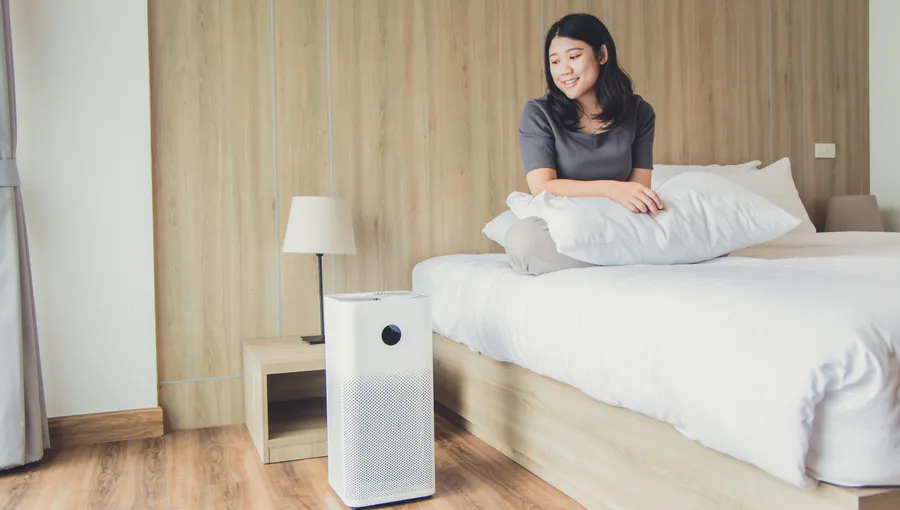
Cleaner bedroom air, better blood sugar? A new randomized trial found that prediabetic patients who slept with HEPA air purifiers saw a 7% reduction in glucose variability over 4 weeks. Researchers say air pollution is a modifiable cardiovascular risk factor, and while filters don't replace healthy habits, the risk-benefit balance looks favorable.
A new study presented at the American Heart Association 2026 Scientific Sessions suggests that sleeping with a HEPA air purifier could meaningfully improve blood sugar regulation in people with prediabetes. The Cleaner Air for Lower Cardiometabolic Risk trial randomized 150 prediabetic adults in the New York City area to either a functioning HEPA filter or a sham device in their bedrooms for 4 weeks. Those with the real filter saw a 36% drop in bedroom PM2.5 pollution levels — and their glucose variability fell by 7%.
Lead investigator Sharine Wittkopp, MD, PhD (NYU Grossman School of Medicine), noted that CGM metrics like breakfast time-to-peak amplitude and incremental area under the curve also improved, with reductions comparable to cutting out about 2 teaspoons of sugar at breakfast. She emphasized that HEPA filters are a complementary tool — not a replacement for medication, diet, or exercise — but that "the benefits outweigh the risks."
By the Numbers:
Why it matters: Air pollution ranks among the top five global causes of death and is the third-highest risk factor for type 2 diabetes. For the millions living with prediabetes, a low-cost, low-risk intervention like a bedroom HEPA filter could be a practical addition to cardiometabolic risk reduction strategies.