Turn on cookies to sign in
Signing in saves your progress to your Curie account. We can only do that with cookies on — turn them on to continue.
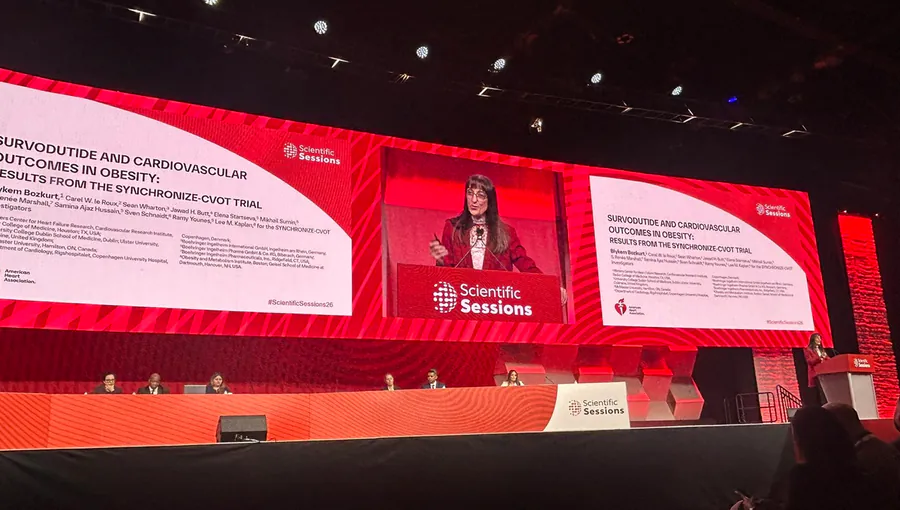
Survodutide, a novel dual glucagon/GLP-1 receptor agonist, proved noninferior to placebo for major adverse cardiovascular events in the SYNCHRONIZE-CVOT trial, enrolling over 5,500 high-risk adults with obesity. The drug also delivered meaningful weight loss and cardiometabolic improvements. Experts say it adds to the growing arsenal of weight-management therapies, though it hasn't yet demonstrated the CV superiority already shown by semaglutide and tirzepatide.
Survodutide (Boehringer Ingelheim), a once-weekly dual agonist of the glucagon and GLP-1 receptors, has cleared a key cardiovascular safety hurdle. In the phase III SYNCHRONIZE-CVOT trial — presented at the American Heart Association 2026 Scientific Sessions and published simultaneously in The Lancet — the drug was noninferior to placebo for a five-component MACE endpoint (CV death, nonfatal stroke, nonfatal MI, ischemia-related coronary revascularization, or heart failure event) in adults with obesity and established CVD or high CV risk.
Beyond safety, survodutide also delivered meaningful metabolic benefits: up to 9.7% body weight reduction at 72 weeks, significant improvements in blood pressure, waist circumference, lipids, and inflammatory markers, and a 72% reduction in new-onset type 2 diabetes risk. Experts welcomed the data but noted that survodutide has not demonstrated CV superiority — a bar already cleared by semaglutide and tirzepatide — which may influence prescribing decisions in high-risk patients.
By the Numbers:
Why it matters: With reimbursement instability plaguing existing incretin therapies, having more CV-safe weight-management options on the market could increase competition, reduce costs, and give clinicians more flexibility in personalizing treatment for patients with obesity and cardiometabolic risk.