

Turn on cookies to sign in
Signing in saves your progress to your Curie account. We can only do that with cookies on — turn them on to continue.
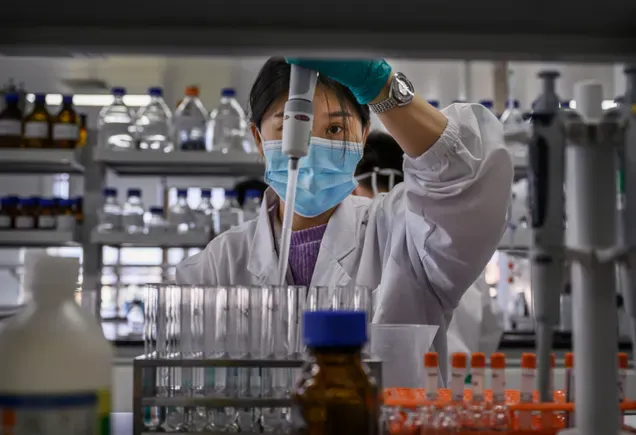
A congressional commission is sounding the alarm over China's five-year plan to produce 25% of the world's new drugs by 2030, warning it could allow China to "corner" the biopharma sector. The report urges lawmakers to act fast to prevent overdependence on Chinese supply chains and calls for measures to keep U.S. drug innovation competitive. Over 120 U.S.-China licensing deals since 2025 signal just how fast China's biotech clout is growing.
A congressional commission is raising red flags about China's sweeping five-year plan to become a global biopharma powerhouse — and what it could mean for American patients and drug innovation. The National Security Commission on Emerging Biotechnology released a report warning that China's goal of producing 25% of the world's "first-in-class drugs" by 2030 could allow it to "corner the sector" and leave the U.S. dangerously dependent on Chinese supply chains.
The commission — an 11-member group formed in 2022 — endorsed a Treasury Department proposal to add biotech to the "COINS Act," which would limit certain transactions with Chinese companies. It also called on the U.S. government to "out-innovate strategic competitors before it's too late," echoing the urgency that drove the 2022 CHIPS Act for semiconductors.
By the Numbers:
Why it matters: Cross-border pharma deals are increasingly transferring critical R&D knowledge — like regulatory and commercialization know-how — to Chinese partners, a pattern that mirrors how China gained dominance in autos and semiconductors. Policymakers and industry leaders say the window to act is narrowing fast.


