

Turn on cookies to sign in
Signing in saves your progress to your Curie account. We can only do that with cookies on — turn them on to continue.
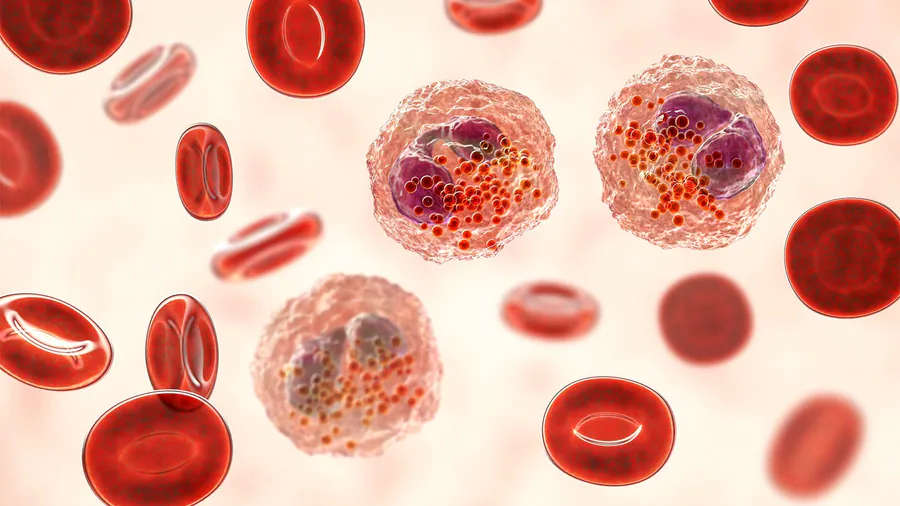
Your eosinophil count might be more powerful than we thought. A large study found that higher levels of these immune cells in the blood were linked to significantly better survival outcomes in the most common type of breast cancer — and better responses to CDK4/6 inhibitors. The best part? It's already measured in a standard blood test.
A routine complete blood count (CBC) may hold a hidden gem for breast cancer prognosis. Researchers from Fudan University Shanghai Cancer Center found that higher circulating eosinophil levels — a type of immune cell — were strongly associated with better recurrence-free and distant metastasis-free survival in hormone receptor (HR)-positive/HER2-negative breast cancer, the most common breast cancer subtype. The findings, published in the Journal of Clinical Oncology, were validated in a large cohort of over 23,000 patients.
Beyond prognosis, higher eosinophil counts also predicted who would benefit most from CDK4/6 inhibitors — a key class of drugs in this cancer type — offering a potential tool for smarter patient selection. Mouse model experiments further confirmed that eosinophils can actively suppress tumor growth.
Key Takeaways
Why it matters: Despite being readily available from a standard blood draw, eosinophil counts aren't currently used in routine breast cancer care. If validated further, this simple, low-cost biomarker could meaningfully improve risk stratification and treatment decisions for millions of patients worldwide.


