Turn on cookies to sign in
Signing in saves your progress to your Curie account. We can only do that with cookies on — turn them on to continue.
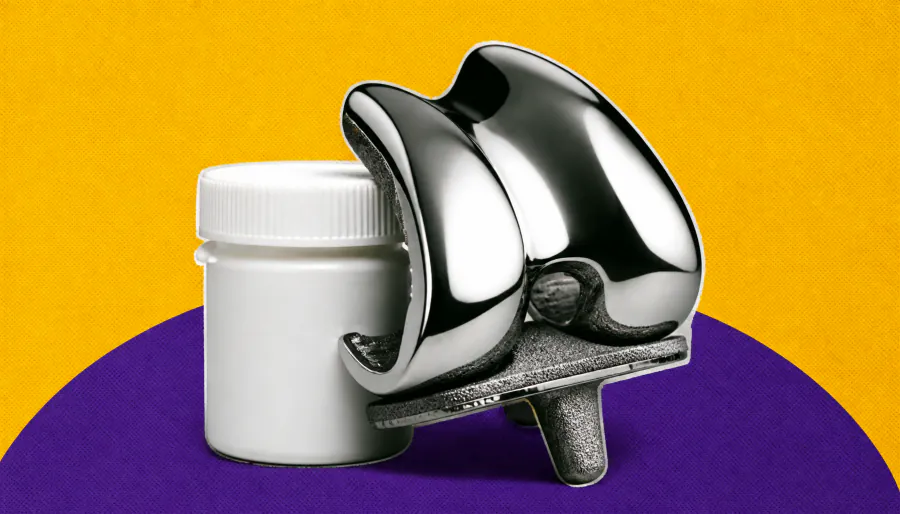
A new study suggests that using liposomal bupivacaine during total knee arthroplasty (TKA) could meaningfully cut post-op opioid use. Patients who received it reported less pain, better knee function, and left the hospital nearly 6 hours earlier than those on conventional anesthetics. Experts say it's a promising piece of the puzzle toward opioid-free orthopedic surgery.
Fewer opioids, faster recovery — that's the promise of liposomal bupivacaine for patients undergoing total knee arthroplasty (TKA). A multicenter prospective study found that opioid-naive patients who received the drug intraoperatively fared significantly better than those given conventional local anesthetics across multiple recovery metrics.
The study, drawing from the Innovations in Genicular Outcomes Research registry, tracked 225 patients — 42 receiving liposomal bupivacaine and 183 receiving standard anesthetics. Those in the liposomal bupivacaine group reported lower pain scores, better knee function, and were discharged nearly 6 hours sooner. Researchers and clinicians see this as a meaningful step toward reducing reliance on opioids post-surgery, though they caution that a one-size-fits-all approach still has limitations.
By the Numbers:
Why it matters: Post-op pain is one of the biggest barriers to early mobilization after TKA, with long-term consequences for recovery. As orthopedic surgeons push toward opioid-free protocols, tools like liposomal bupivacaine offer a tangible path forward — though personalized treatment strategies will be key to maximizing impact.