Turn on cookies to sign in
Signing in saves your progress to your Curie account. We can only do that with cookies on — turn them on to continue.
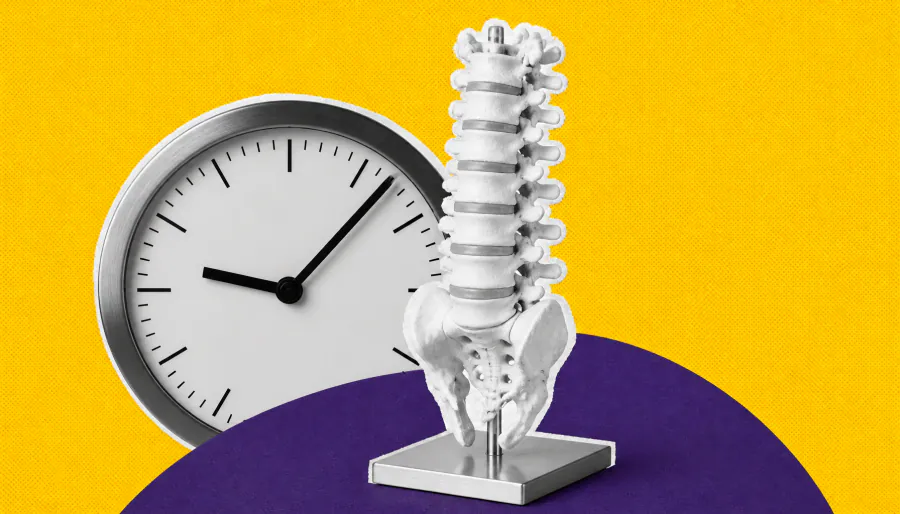
Only 31% of older adults went home the same day after minimally invasive lumbar fusion — and longer operative time was the biggest culprit. A new study found that surgical efficiency, not patient age, was the key driver of same-day discharge success. Streamlining the OR and prioritizing early physical therapy could make ambulatory spine surgery more achievable for seniors.
Most older adults undergoing minimally invasive lumbar fusion aren't making it home the same day — and a new study points to the operating room clock as the main reason why. Researchers at Hospital for Special Surgery reviewed data from 79 patients aged 60 and older who were designated for same-day discharge after minimally invasive transforaminal lumbar interbody or posterolateral fusion. Only 31% actually achieved it; the remaining 68% required at least an overnight stay.
Interestingly, age itself wasn't the deciding factor — operative time was. Longer surgeries were significantly associated with failed ambulatory discharge, suggesting that case complexity and OR efficiency play a bigger role than a patient's age alone.
Key Takeaways:
Why it matters: As spine surgery shifts toward outpatient settings, understanding what derails same-day discharge is essential. These findings give surgeons a clearer roadmap for selecting appropriate candidates and optimizing the full perioperative pathway to make ambulatory lumbar fusion a realistic option for older patients.