Turn on cookies to sign in
Signing in saves your progress to your Curie account. We can only do that with cookies on — turn them on to continue.
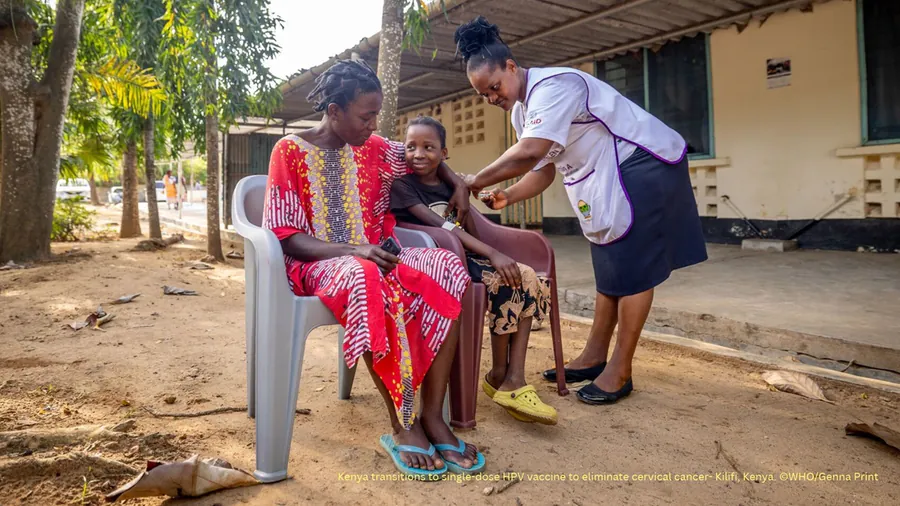
Women living with HIV face a six-fold higher risk of cervical cancer, yet gaps in integrated care persist. On World Cervical Cancer Elimination Day, WHO is urging stronger links between HIV and cervical cancer services — from HPV vaccination to screening and treatment. The goal: ensure no woman is left behind on the path to global cervical cancer elimination.
Women living with HIV carry a disproportionate burden of cervical cancer — facing six times the risk of their HIV-negative peers, worse treatment outcomes, and a three-fold greater likelihood of residual tumours after radiotherapy. On World Cervical Cancer Elimination Day, WHO is calling for a coordinated, person-centred approach that fully integrates HIV and cervical cancer services.
The good news? Progress is happening. More than 50% of girls in the WHO African Region — the hardest-hit area — received at least one HPV vaccine dose in 2025, and around 133 countries have introduced cervical cancer screening. Crucially, when women living with HIV are on antiretroviral therapy (ART) at the start of cancer treatment, mortality gaps largely disappear.
By the Numbers:
Why it matters: HIV programs offer a powerful, existing platform to deliver HPV screening and cancer care — but only if services are deliberately linked. Closing this integration gap could prevent thousands of avoidable deaths among one of the world's most vulnerable populations.