Turn on cookies to sign in
Signing in saves your progress to your Curie account. We can only do that with cookies on — turn them on to continue.
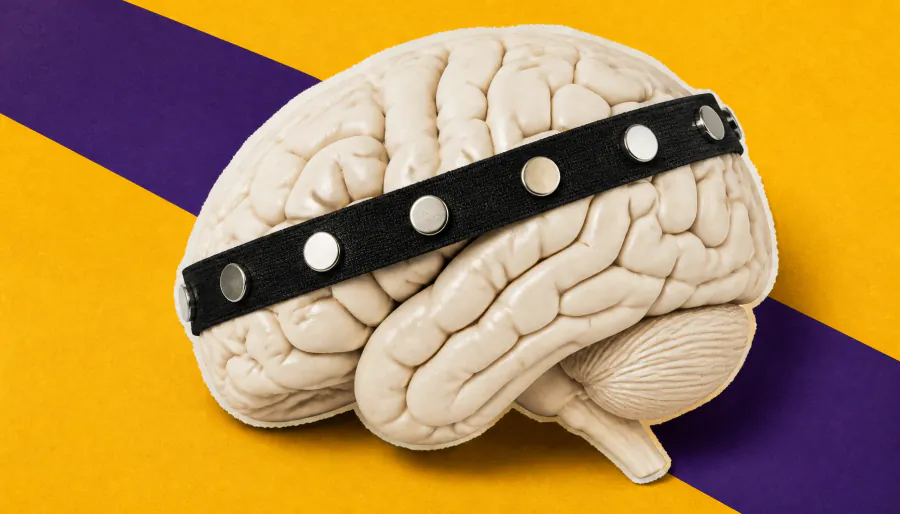
Forget brain surgery — tiny magnets might do the trick. Researchers have developed magnetic nanoplatelets that, when injected into the brain and activated by an external magnetic field, significantly improved movement in mice with Parkinson's-like symptoms. The results were comparable to conventional deep brain stimulation, but without the need for permanently implanted electrodes — and a wearable headband could one day deliver the therapy.
An international research team has developed a potentially game-changing approach to treating Parkinson's disease: injecting tiny magnetic nanoplatelets into a deep brain region and activating them with an external magnetic field. Published in Advanced Science, the study found that the technique significantly improved movement deficits in mice with Parkinson's-like symptoms — without the need for permanently implanted electrodes.
Here's how it works: the nanoplatelets convert magnetic fields into microscopic mechanical forces, gently deforming nearby nerve cell membranes. This opens pressure-sensitive ion channels, altering the electrical activity of neurons in the subthalamic nucleus — the same brain region targeted by conventional deep brain stimulation (DBS). The particles showed no signs of causing inflammation over several months of observation.
Key Takeaways:
Why it matters: Conventional DBS requires complex surgery and isn't suitable for all patients. This magnetic approach could offer a simpler, cheaper, and more flexible alternative — though human trials are still years away.