Turn on cookies to sign in
Signing in saves your progress to your Curie account. We can only do that with cookies on — turn them on to continue.
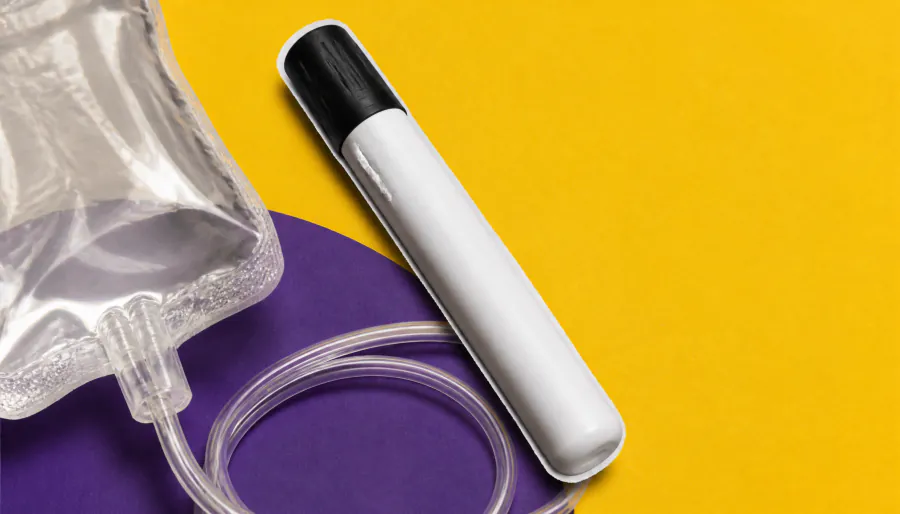
A new at-home treatment option for myasthenia gravis just got the FDA's stamp of approval. Klygefa (gefurulimab-gaks) is the first dual-binding nanobody complement C5 inhibitor cleared for adults with anti-AChR antibody-positive generalized myasthenia gravis (gMG), offering a once-weekly subcutaneous self-injection — a notable convenience upgrade over existing IV infusion options.
The FDA has approved Klygefa (gefurulimab-gaks), a first-of-its-kind dual-binding nanobody complement C5 inhibitor, for adults with anti-acetylcholine receptor (AChR) antibody-positive generalized myasthenia gravis (gMG). Unlike the two previously approved C5 inhibitors — eculizumab (2017) and ravulizumab (2022), both requiring IV infusions every 2–8 weeks — Klygefa is self-administered subcutaneously once weekly via autoinjector, giving patients greater autonomy in managing their disease.
Klygefa works by blocking C5 in the terminal complement cascade, preventing immune-mediated damage at the neuromuscular junction. Its concurrent binding to serum albumin extends its half-life, making weekly dosing possible. The drug targets a large portion of the gMG population: AChR antibody-positive patients represent roughly 85% of all gMG cases, or about 81,000 of the estimated 98,500 Americans living with the condition.
By the Numbers
Why it matters: Klygefa offers gMG patients a convenient, self-administered alternative to hospital-based IV infusions, potentially improving adherence and quality of life. It also expands the mechanistic toolkit available to neurologists, complementing existing FcRn inhibitors and IV C5 inhibitors for a disease that can be severely debilitating.