Turn on cookies to sign in
Signing in saves your progress to your Curie account. We can only do that with cookies on — turn them on to continue.
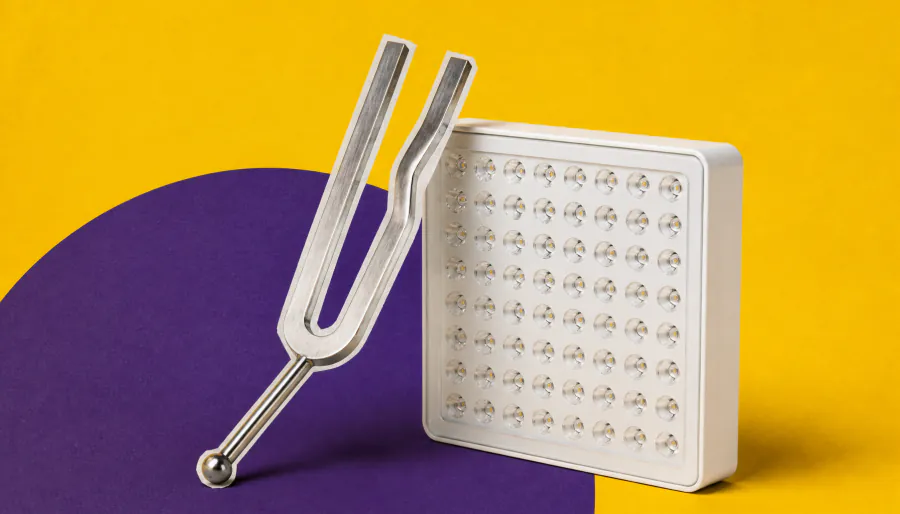
Cognito Therapeutics' Spectris, a device that uses 40-Hz light and sound stimulation, missed its primary endpoint in the 12-month HOPE trial for Alzheimer's disease. However, a prespecified subgroup of patients with mild AD showed meaningful slowing in functional decline and disease severity compared to sham. Cognito plans to engage the FDA about a De Novo submission for early symptomatic Alzheimer's disease.
Cognito Therapeutics' Spectris — an at-home device that delivers synchronized 40-Hz light and sound stimulation — did not meet its primary endpoint in the pivotal HOPE trial, a 12-month, randomized, double-blind, sham-controlled study enrolling 673 patients with biomarker-confirmed Alzheimer's disease (AD). In the overall modified intention-to-treat population, neither the primary composite measure (iADMARS) nor secondary endpoints showed significant separation from sham.
That said, a prespecified subgroup of patients with mild AD offered more encouraging signals. In this group, Spectris was associated with nominally significant slowing of decline in daily functioning and disease severity — though the composite primary endpoint and MMSE did not reach nominal significance. Experts caution that subgroup results are unadjusted for multiplicity and that per-protocol analyses carry adherence-related bias.
By the Numbers:
Why it matters: Spectris represents a fundamentally different, non-pharmacological approach to Alzheimer's — one that doesn't carry the ARIA risk of antiamyloid therapies. While the trial missed its primary endpoint, the mild AD subgroup findings are prompting FDA discussions around a De Novo pathway, keeping this novel mechanism alive as a potential complement to drug-based treatments.