Turn on cookies to sign in
Signing in saves your progress to your Curie account. We can only do that with cookies on — turn them on to continue.
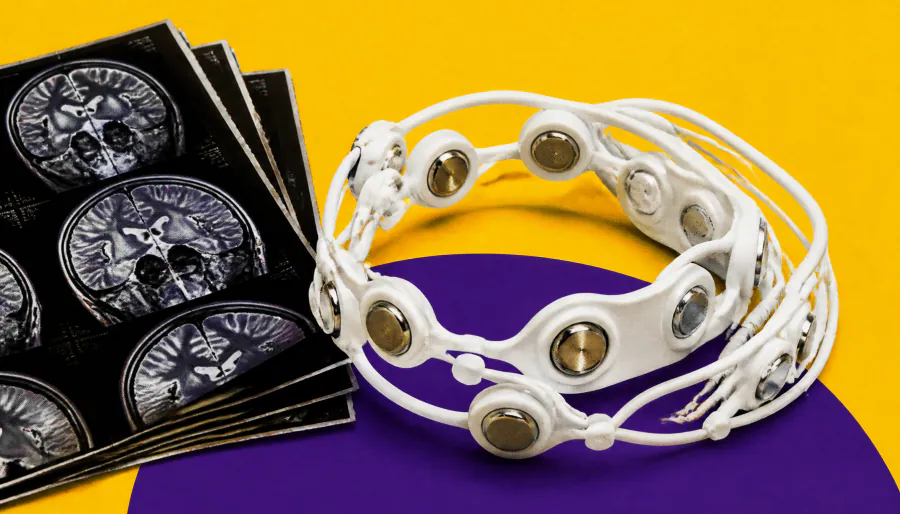
Standard MRI may be underselling vorasidenib's impact in IDH-mutant glioma. A prospective study of 54 patients found that volumetric MRI and 18F-DOPA PET detected responses far earlier than conventional imaging — and seizure control emerged as the fastest signal of all, often within weeks of starting treatment.
Standard MRI may be underselling how well vorasidenib (Voranigo) is working in patients with IDH-mutant grade 2 glioma. A prospective study of 54 patients presented at the 2026 SNO Annual Meeting found that layering advanced imaging tools on top of conventional MRI dramatically shortens the time to detecting a treatment response — a meaningful advantage for a slow-growing tumor where small changes matter.
Conventional bidimensional MRI showed an objective response rate (ORR) of just 17%, with a median time to response of 11.5 months. Volumetric MRI bumped that ORR to 28.3% and cut the detection time nearly in half, to 5.7 months. But the real standout was 18F-DOPA PET, which identified responses in 76.5% of evaluable patients within a median of just 3.2 months.
Seizure control proved to be the earliest and most practical signal — 92% of patients with active seizures at baseline responded, with a median time to seizure freedom of just 28 days.
Key Takeaways:
Why it matters: For a high-cost drug treating a slow-growing tumor in often-young patients, earlier confirmation of response isn't just reassuring — it's clinically and practically essential for guiding treatment decisions and patient quality of life.