Turn on cookies to sign in
Signing in saves your progress to your Curie account. We can only do that with cookies on — turn them on to continue.
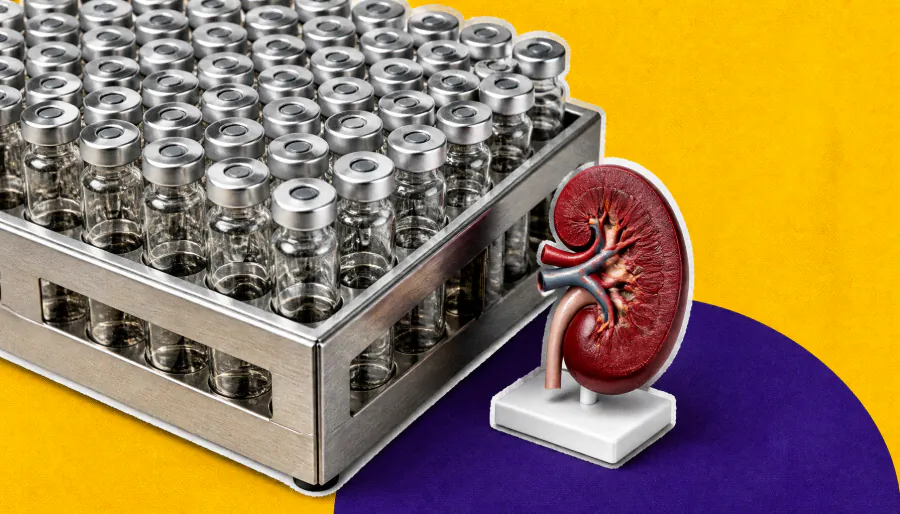
Multiple drugs are showing strong results against IgA nephropathy, a kidney disease with few treatment options. Sefaxersen, atacicept, sibeprenlimab, telitacicept, povetacicept, and ravulizumab all demonstrated significant reductions in proteinuria and, in some cases, preserved kidney function in phase 3 trials. The findings, presented at ASN Kidney Week, signal a major shift in how this immune-mediated kidney disease may be treated.
IgA nephropathy (IgAN), an immune-mediated kidney disease that can silently progress to kidney failure, is seeing a remarkable wave of therapeutic advances. Multiple phase 3 trials presented at ASN Kidney Week in Denver showed that several novel agents — sefaxersen, atacicept-vymj, sibeprenlimab, telitacicept, povetacicept, and ravulizumab — each significantly reduced proteinuria and, in longer-term data, slowed or halted kidney function decline compared to placebo.
Atacicept-vymj (Trutakna) and sibeprenlimab (Voyxact), both already FDA-approved on an accelerated basis, confirmed their benefit in final 2-year analyses: atacicept cut the risk of composite kidney disease progression by 76%, while sibeprenlimab reduced it by 97%. Sefaxersen, an antisense oligonucleotide targeting complement factor B, delivered a 43.1% placebo-adjusted reduction in proteinuria and resolved hematuria in 56.3% of patients at 9 months. Telitacicept showed meaningful eGFR preservation at 2 years, and povetacicept achieved a 52% proteinuria reduction at 36 weeks.
By the Numbers
Why it matters: For a disease that historically had limited treatment options, this convergence of positive trial data marks a turning point. Nephrologists may soon have multiple disease-modifying therapies to choose from, with the potential to meaningfully reduce the risk of kidney failure in high-risk IgAN patients.