Turn on cookies to sign in
Signing in saves your progress to your Curie account. We can only do that with cookies on — turn them on to continue.
Restoring sight with a smarter brain implant: Scientists have developed an AI system that predicts and fine-tunes the visual sensations produced by a brain implant in a blind patient. By learning how an individual's visual cortex responds to electrical stimulation, the technology could pave the way for personalized bionic vision devices that actually adapt to the user.
Restoring sight with a smarter brain implant
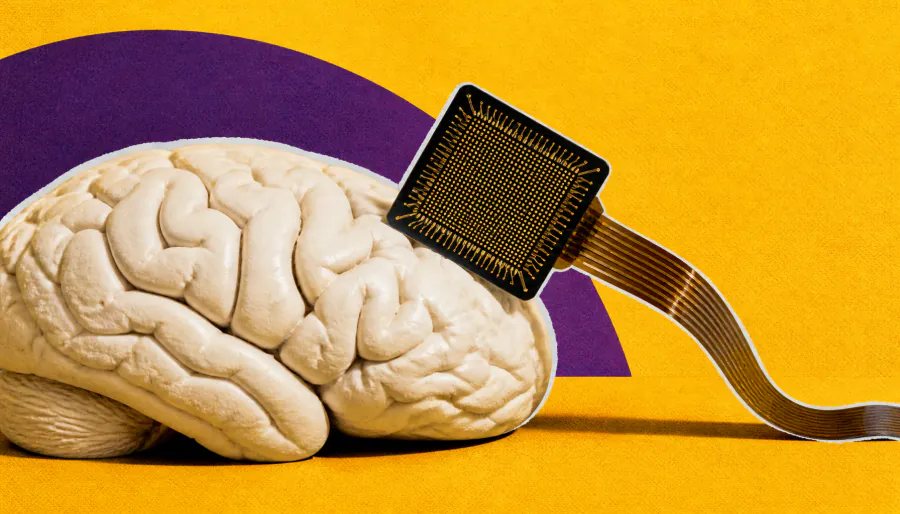
Researchers from UC Santa Barbara, ETH Zurich, and Miguel Hernández University have demonstrated that AI can meaningfully improve the precision of visual cortical prostheses — devices that bypass damaged eyes entirely and deliver electrical signals straight to the brain's visual cortex. Unlike retinal implants, these "bionic eyes" could help people blinded by strokes, traumatic brain injuries, or neurodegenerative diseases.
The team tested their system on a 27-year-old man in Spain who had lost his sight after a traumatic brain injury. His implant — a 96-electrode array in the visual cortex — produced phosphenes (flashes and shapes of light) when activated. The AI model was trained on the brain's actual responses to stimulation, allowing it to predict and optimize which electrical signals would produce specific visual patterns more reliably and with less current.
Key Takeaways
Why it matters: Most bionic vision systems use a one-size-fits-all approach, but brains don't work that way. This personalized, adaptive AI framework could be the key to making visual prostheses genuinely useful for the millions living with blindness.