Turn on cookies to sign in
Signing in saves your progress to your Curie account. We can only do that with cookies on — turn them on to continue.
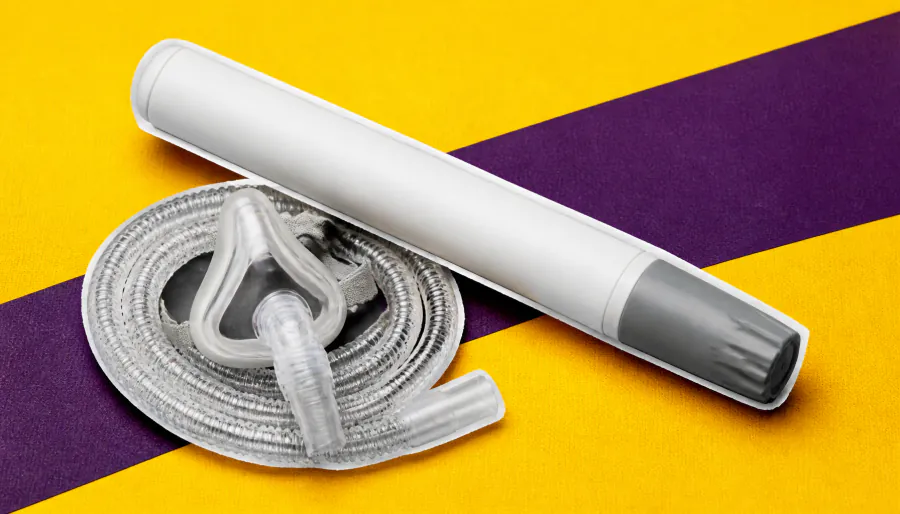
A once-weekly injectable drug, retatrutide, dramatically cut sleep apnea severity in two large phase 3 trials — and researchers say it could eventually replace CPAP machines. The triple-receptor agonist (targeting GIP, GLP-1, and glucagon) slashed breathing interruptions during sleep by up to 34 events per hour versus just 10 with placebo, while also driving significant weight loss and cardiometabolic improvements in patients with and without type 2 diabetes.
A once-weekly injection of retatrutide (Eli Lilly) — a triple hormone receptor agonist targeting GIP, GLP-1, and glucagon — significantly reduced obstructive sleep apnea (OSA) severity in two phase 3 trials (TRIUMPH-1-OSA and TRIUMPH-2-OSA), published in The New England Journal of Medicine. The trials enrolled 691 adults with moderate-to-severe OSA and obesity, both with and without type 2 diabetes, and followed them for 80 weeks. Notably, this is the first major trial to include patients with both OSA and type 2 diabetes — a population previously overlooked.
Beyond OSA, retatrutide also improved systolic and diastolic blood pressure, cholesterol, triglycerides, and inflammatory markers. In the diabetes cohort, HbA1c and fasting glucose fell significantly as well. Researchers say the drug's broad cardiometabolic benefits may give it an edge over CPAP, which doesn't reduce blood pressure or cause weight loss. A head-to-head trial comparing retatrutide with CPAP is now being planned.
By the Numbers:
Why it matters: This class of incretin-based drugs could fundamentally reshape OSA treatment — offering a once-weekly injection that tackles sleep apnea, obesity, and cardiovascular risk simultaneously, potentially reducing reliance on CPAP for millions of patients.