Turn on cookies to sign in
Signing in saves your progress to your Curie account. We can only do that with cookies on — turn them on to continue.
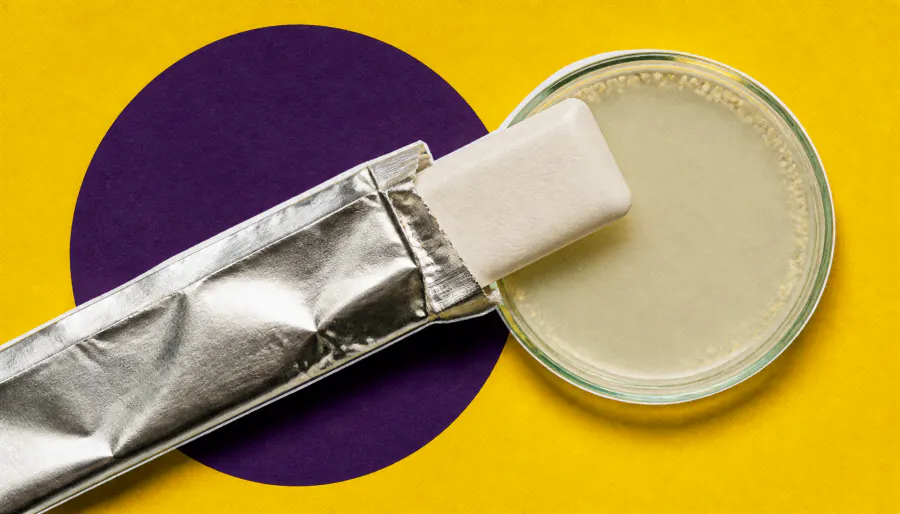
A chewing gum made from lablab beans could become a surprising new tool against head and neck cancer. In lab tests using samples from cancer patients, extracts from the gum cut HPV levels by up to 93% and nearly wiped out two cancer-linked bacterial species — all while leaving beneficial oral bacteria untouched. Researchers say the findings support moving toward human clinical trials.
A team from the University of Pennsylvania has developed a bioengineered chewing gum that could one day help fight head and neck cancer by targeting the viruses and bacteria linked to it. Made from lablab beans, the gum contains FRIL — a naturally occurring protein with antiviral properties — and was tested against oral samples from cancer patients in the lab. The results? HPV levels dropped by up to 93% in saliva samples and 80% in oral rinse samples.
The researchers then enhanced the gum by adding protegrin, an antimicrobial peptide. This upgraded version nearly eliminated two harmful bacterial species — Porphyromonas gingivalis and Fusobacterium nucleatum — both linked to worse outcomes in oral cancer patients. Crucially, the treatment left beneficial oral bacteria unharmed, a meaningful advantage over therapies like radiation, which can disrupt the oral microbiome.
By the Numbers:
Why it matters: Head and neck cancers are notoriously hard to treat at advanced stages, and current therapies offer limited quality-of-life improvements. A low-cost, plant-based gum that selectively targets harmful microbes — without disrupting the oral microbiome — could serve as a practical adjunct to existing treatments or even a preventive tool. Human clinical trials are the critical next step.