Turn on cookies to sign in
Signing in saves your progress to your Curie account. We can only do that with cookies on — turn them on to continue.
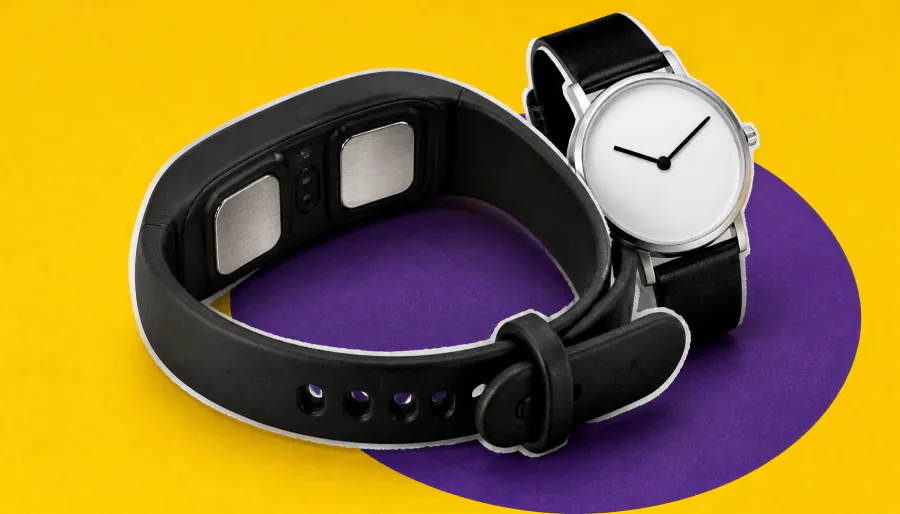
A wearable therapy for essential tremor keeps working even when it's off. A retrospective analysis of the PROSPECT trial found that consistent use of transcutaneous afferent patterned stimulation (TAPS) reduced baseline tremor severity — not just during sessions, but hours afterward. Over 80% of patients met responder criteria on both patient- and clinician-rated scales at 1 and 3 months.
A wearable nerve stimulator may do more than just quiet tremors in the moment — it could be gradually dialing them down over time. A retrospective analysis of the PROSPECT trial found that consistent use of transcutaneous afferent patterned stimulation (TAPS) — a wrist-worn device that stimulates the median and radial nerves — was associated with meaningful reductions in underlying tremor severity in patients with essential tremor (ET), even ~16 hours after the last session.
The study compared pre-stimulation tremor scores at enrollment versus 1 and 3 months later in 192 of 263 enrolled patients. Improvements were seen on both patient-rated (BF-ADL) and clinician-rated (TETRAS) scales, with more than 80% of patients qualifying as responders at both time points. Notably, patients averaged 1.4 sessions per day rather than the 2 sessions per day specified by the protocol — yet benefits were still observed.
By the Numbers:
Why it matters: Essential tremor is one of the most common movement disorders, and effective long-term treatments remain limited. These findings suggest TAPS's benefits may extend beyond active stimulation — a meaningful insight for clinicians counseling patients on adherence. That said, the lack of a control arm and potential placebo or learning effects mean randomized sham-controlled trials are still needed to confirm the magnitude of the effect.