Turn on cookies to sign in
Signing in saves your progress to your Curie account. We can only do that with cookies on — turn them on to continue.
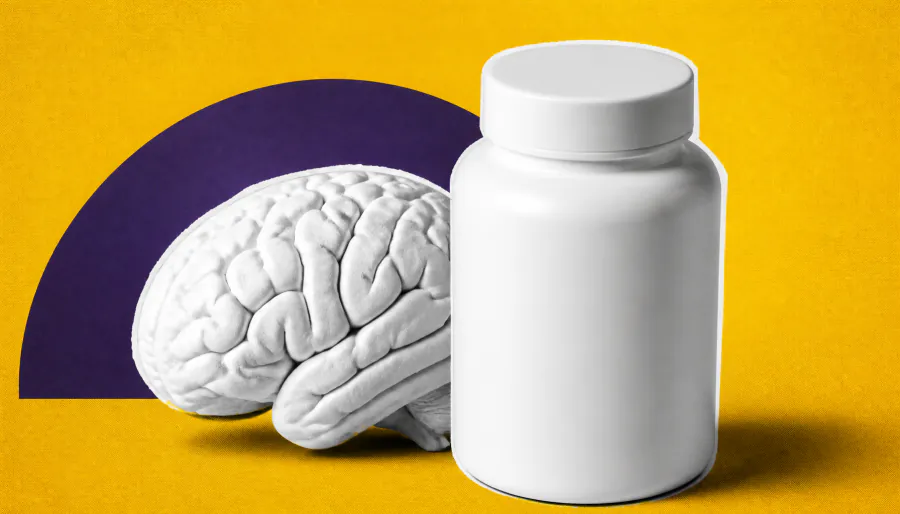
A UCLA study found that breast cancer survivors who took an oxaloacetate supplement for eight weeks reported major improvements in memory, concentration, and fatigue — moving from "impaired" to "normal" range on cognitive scores. The small phase II trial showed promising results, though researchers caution that a placebo-controlled study is still needed to confirm the findings.
Brain fog and exhaustion after breast cancer treatment are real — and notoriously hard to treat. But a new UCLA study published in JCO Oncology Advances offers a glimmer of hope: a supplement containing oxaloacetate, a molecule naturally found in the body, may help survivors regain mental clarity and energy. In a small phase II trial, 16 breast cancer survivors who completed eight weeks of supplementation all reported significant improvements in cognitive symptoms, fatigue, and physical functioning.
Oxaloacetate is thought to work by supporting cellular energy production and regulating glutamate signaling — two pathways that cancer treatment can disrupt, contributing to the "chemo brain" many survivors experience. Improvements were visible as early as four weeks in, and standardized cognitive tests also showed gains in processing speed and executive function.
By the Numbers:
Why it matters: Up to 1 in 4 breast cancer survivors struggle with lingering cognitive issues, yet effective treatments remain scarce. While this trial was small and lacked a placebo group, UCLA is now preparing a randomized, placebo-controlled phase II trial — a critical next step toward a potential new standard of care for cancer-related cognitive impairment.