Turn on cookies to sign in
Signing in saves your progress to your Curie account. We can only do that with cookies on — turn them on to continue.
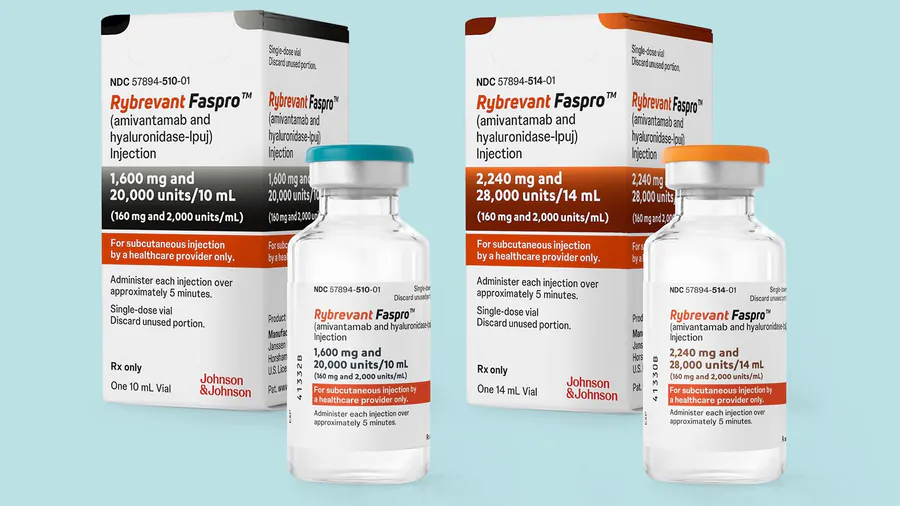
A new treatment option for a tough cancer just got the FDA's stamp of approval. The agency granted accelerated approval to subcutaneous amivantamab and hyaluronidase (Rybrevant Faspro) for adults with recurrent or metastatic head and neck squamous cell carcinoma (HNSCC) that progressed after platinum-based chemo and immunotherapy. In a phase Ib/II trial, it achieved a 42% overall response rate — more than double the ~20% seen with currently approved therapies.
A new option for a cancer with few good ones. The FDA has granted accelerated approval to subcutaneous amivantamab and hyaluronidase (Rybrevant Faspro) for adults with recurrent or metastatic head and neck squamous cell carcinoma (HNSCC) whose disease progressed on or after platinum-based chemotherapy and immunotherapy. The approval excludes patients with HPV-associated oropharyngeal cancer.
What makes it different? Amivantamab targets both EGFR and MET — two key drivers of tumor growth in HNSCC — making it the first dual-targeted therapy approved for this indication. The drug was already approved for certain non-small cell lung cancers, and this marks a significant expansion into head and neck oncology.
By the Numbers:
Why it matters: HNSCC has long been a difficult-to-treat cancer with limited options after first-line therapy fails. This approval offers patients a meaningfully more effective alternative, though full approval hinges on results from the ongoing phase III OrigAMI-5 trial evaluating amivantamab alongside carboplatin and pembrolizumab in the first-line setting.