Turn on cookies to sign in
Signing in saves your progress to your Curie account. We can only do that with cookies on — turn them on to continue.
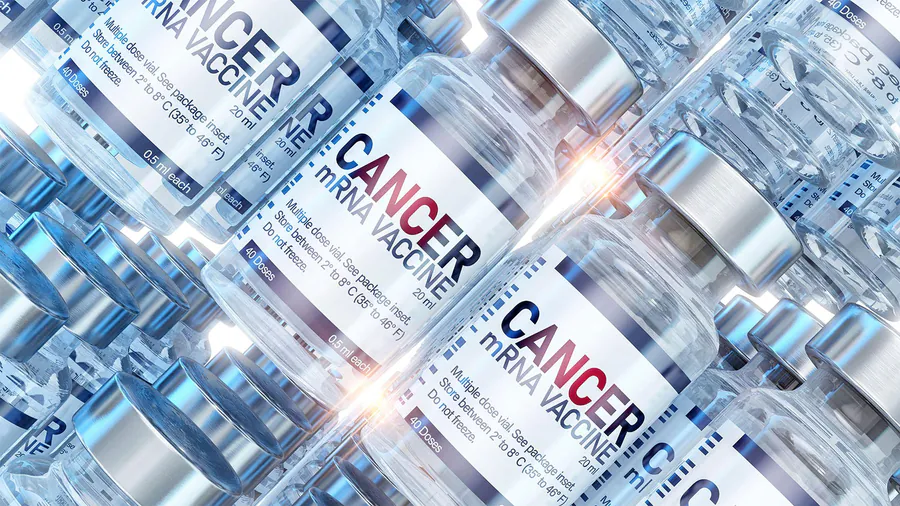
The first phase 3 trial of a personalized mRNA cancer vaccine hit its mark, showing a meaningful reduction in melanoma recurrence when added to pembrolizumab. But experts caution that not all patients benefited, overall survival data are still pending, and it's unclear how these vaccines fit alongside rapidly advancing neoadjuvant immunotherapy strategies. The work of figuring out who benefits most — and how to make these treatments accessible — is just beginning.
The INTerpath-001 trial made history as the first phase 3 study of a personalized mRNA cancer vaccine to meet its primary endpoint. In over 1,100 patients with resected high-risk melanoma, adding intismeran autogene (Moderna/Merck) to pembrolizumab boosted 2-year recurrence-free survival to 82.2%, compared to 70% with pembrolizumab alone — a 12.2 percentage point improvement. A separate phase 1 trial of TG4050, a viral vector-based personalized vaccine for head and neck cancer, showed zero recurrences in vaccinated patients vs. 3 in the surveillance group, with durable T-cell responses lasting over a year.
Still, enthusiasm comes with caveats. No overall survival benefit has been demonstrated yet, not all patients responded, and the rapid advances in neoadjuvant immunotherapy raise complex sequencing questions. Experts stress that identifying who benefits from vaccination — versus who can safely skip additional treatment — requires prospective biomarker-driven trials, not just accumulating therapies.
Key Takeaways:
Why it matters: Personalized cancer vaccines could reshape perioperative oncology — but only if the field invests in smarter patient selection, equitable access, and rigorous integration with existing immunotherapy advances.