Turn on cookies to sign in
Signing in saves your progress to your Curie account. We can only do that with cookies on — turn them on to continue.
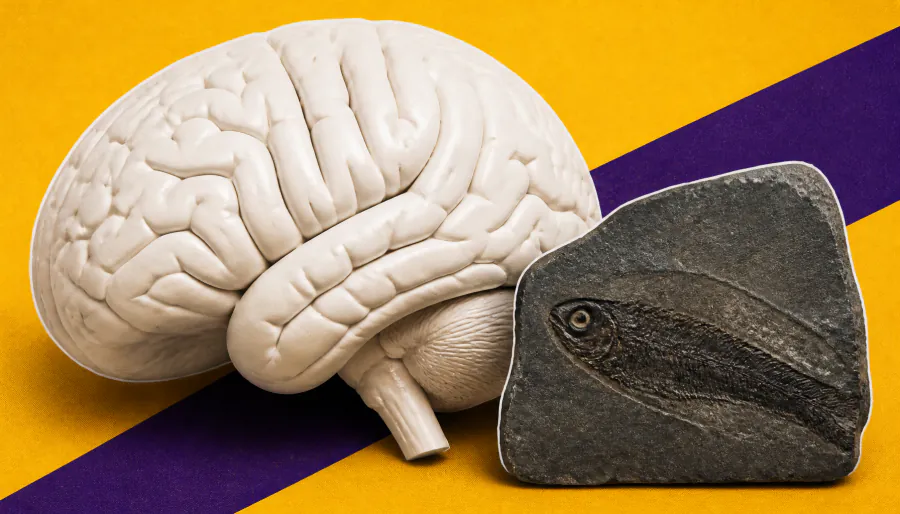
The brain's cross-wiring mystery may finally have an explanation — and it's ancient. Researchers propose that the brain's habit of connecting each hemisphere to the opposite side of the body traces back over 500 million years to the visual systems of early jawless fish. Rather than evolving for a specific advantage, this quirky arrangement may simply be evolution recycling an old blueprint.
Why does your left brain run your right side? Blame ancient fish.
Scientists at the University of Minnesota have proposed a compelling new explanation for one of neuroscience's longest-standing puzzles: why the brain is "cross-wired," with each hemisphere controlling the opposite side of the body. Published in Frontiers in Neuroanatomy, the study suggests this arrangement didn't evolve because it was advantageous — it may simply be a structural legacy inherited from the visual systems of primitive jawless fish that lived over 500 million years ago.
The key players are two ancient brain structures: the optic chiasm (where visual nerve fibers cross sides) and the optic tectum (a midbrain region that processes vision, sound, and touch). Because these structures were already organized around opposite-side information processing, later-evolving sensory and motor pathways — including those for touch, pain, and fine motor control — may have simply followed the same blueprint.
Key Takeaways:
Why it matters: This research reframes how we think about brain architecture — not as optimally designed, but as deeply historical. Understanding the evolutionary roots of neural organization could shed light on why certain neurological conditions affect one side of the body after brain injury on the opposite side.