Turn on cookies to sign in
Signing in saves your progress to your Curie account. We can only do that with cookies on — turn them on to continue.
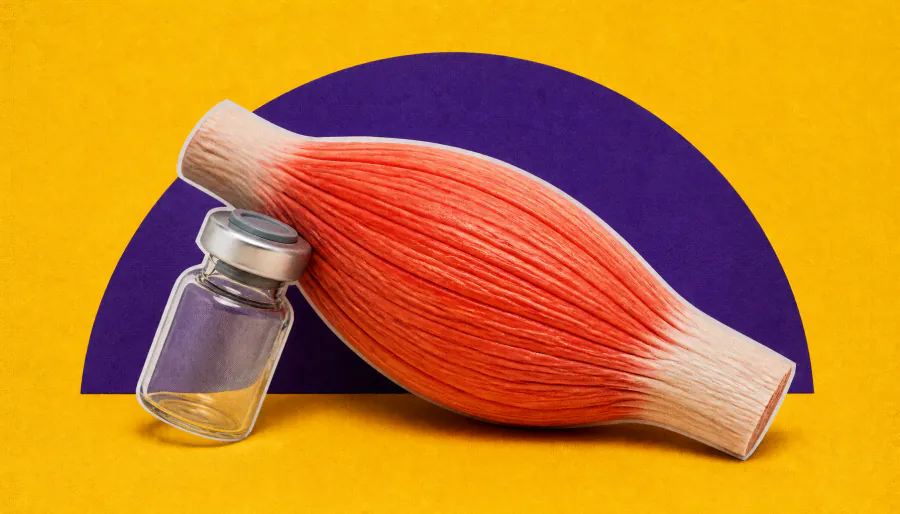
A sulfur-based compound called LASSS has been found to more than double the muscle-repair power of a key protein, HGF, creating what researchers are calling "Super HGF." The discovery, from Kyushu University, could open new doors for combating age-related muscle loss. Early mouse experiments back up the lab findings, though more research is needed.
As we age, muscles don't just get weaker — they lose their ability to repair themselves. A key player in muscle regeneration is a protein called hepatocyte growth factor (HGF), which activates stem cells to fix damaged muscle tissue. Researchers at Kyushu University have found that HGF can be chemically altered with age — a process called nitration — making it less effective at triggering repairs. Think of it like a key that's been worn down and can no longer turn the lock.
Enter LASSS (lipoic acid trisulfide), a sulfur-based antioxidant compound. When mixed with HGF in the lab, LASSS didn't just protect the protein from chemical damage — it supercharged it, more than doubling its ability to bind to its target receptor (c-met) on muscle stem cells. The team is calling this enhanced version "Super HGF." Early mouse experiments also showed that LASSS significantly reduced HGF nitration in living muscle tissue.
Key Takeaways:
Why it matters: Muscle loss affects not just the elderly but anyone facing prolonged inactivity or bed rest. Rather than replacing the body's repair system, this approach seeks to enhance what's already there — a potentially more natural and targeted strategy for preserving mobility and independence as we age.