Turn on cookies to sign in
Signing in saves your progress to your Curie account. We can only do that with cookies on — turn them on to continue.
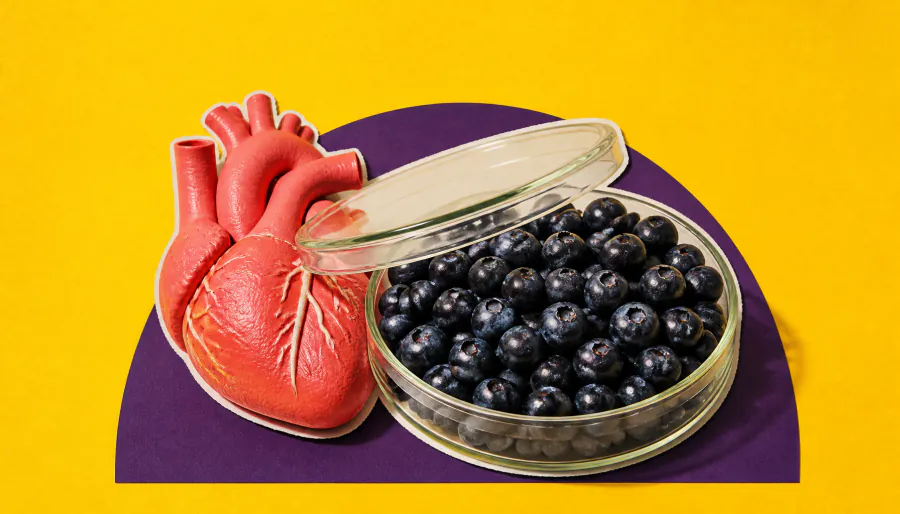
Blueberries' heart-protective powers might depend on your gut bugs. A new mouse study found that blueberry compounds reduced blood vessel inflammation on a high-fat diet — but only when gut microbes were present. Strip away those microbes with antibiotics, and the benefits vanished, suggesting the gut microbiome plays a key role in unlocking blueberries' cardiovascular perks.
Blueberries have long been linked to cardiovascular health, but a new mouse study published in Food & Function reveals the gut microbiome may be the real MVP. Researchers found that gut bacteria convert blueberry phytochemicals into circulating metabolites — including hippuric acid — that are associated with reduced vascular inflammation. When mice on a high-fat diet were given blueberry supplements, they showed less monocyte adhesion to blood vessel walls and lower levels of inflammatory markers like KC and MCP-1.
The catch? When gut microbes were wiped out with antibiotics, those circulating metabolites dropped sharply — and the anti-inflammatory vascular benefits disappeared entirely. Germ-free mice also showed minimal metabolite changes after blueberry intake, reinforcing that the microbiome is essential for processing these plant compounds into their active forms.
Key Takeaways:
Why it matters: This research suggests that gut microbiome health could determine how well dietary interventions like blueberry consumption actually protect the heart — a finding with big implications for personalized nutrition and cardiovascular disease prevention.