Turn on cookies to sign in
Signing in saves your progress to your Curie account. We can only do that with cookies on — turn them on to continue.
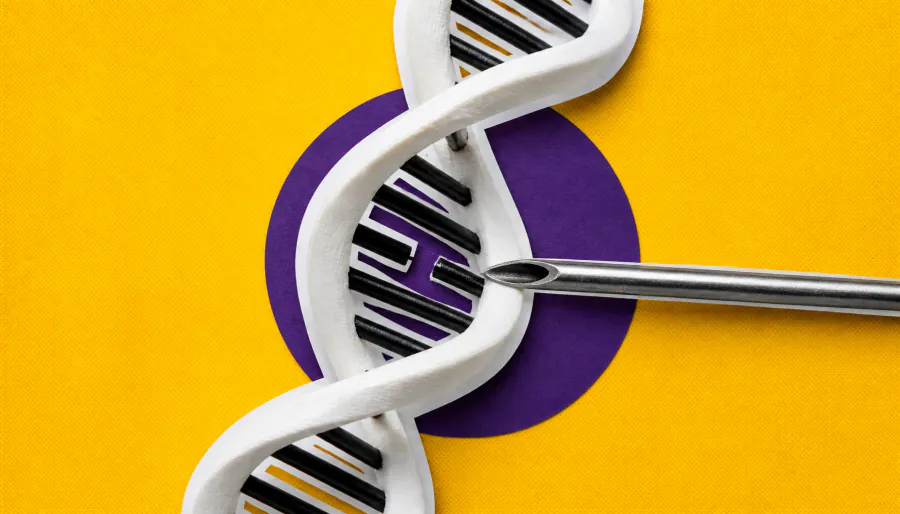
Scientists have engineered synthetic DNA molecules that can directly target and silence cancer-driving genes — a feat that has eluded researchers for decades. By incorporating a commercially available synthetic DNA base called "Z," the team successfully reduced activity of the MYC oncogene by 50–80% in lab experiments. The approach is accessible to labs worldwide and could reshape cancer research and treatment.
For decades, scientists have dreamed of targeting DNA directly to shut down disease-causing genes — but biology kept getting in the way. Now, researchers at the University of Portsmouth have cracked a key piece of that puzzle using specially engineered synthetic DNA molecules called triplex-forming oligonucleotides (TFOs). By incorporating a commercially available synthetic DNA base known as "Z," they enabled these molecules to bind more strongly to tricky GC-rich DNA regions that control gene activity — regions that were previously nearly impossible to target inside living cells.
The team tested their approach on MYC, a gene notorious for fueling cancer growth when overactive. The modified TFOs outperformed both natural DNA and earlier experimental approaches, cutting MYC gene activity by 50–80% in laboratory settings. Crucially, the synthetic base used is commercially available, meaning labs around the world can adopt the technology without needing specialized chemistry expertise.
By the Numbers:
Why it matters: Most genetic medicines target RNA or proteins — steps removed from the root cause. Targeting DNA directly means intervening at the very source of gene expression, potentially offering more efficient and durable control over disease-driving genes like MYC.