Turn on cookies to sign in
Signing in saves your progress to your Curie account. We can only do that with cookies on — turn them on to continue.
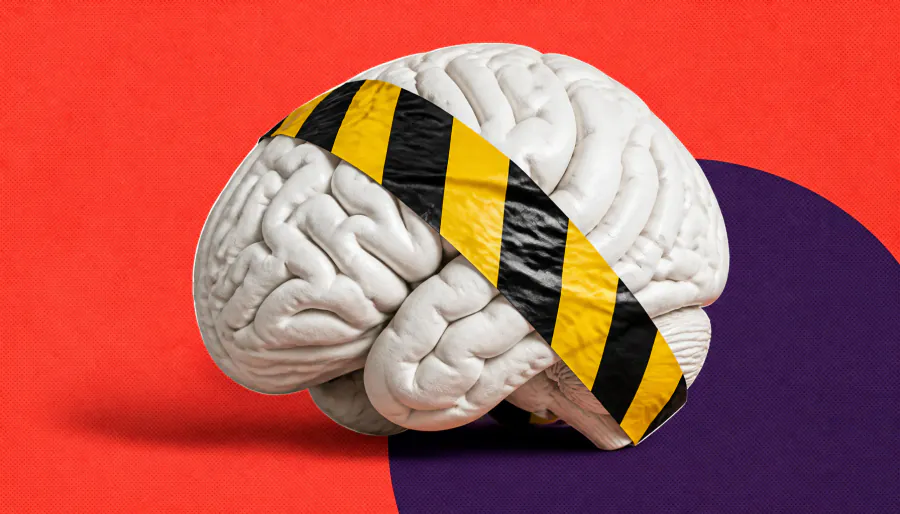
Your brain might be wired to confuse safe situations with dangerous ones — on purpose. A new study from McGill University found that fear causes the brain to blur, not sharpen, the line between threatening and safe memories. This "better safe than sorry" survival mechanism could help explain why people with anxiety or PTSD experience intense fear even when they're completely out of harm's way.
Turns out, your brain isn't always trying to tell the difference between safe and dangerous — sometimes it deliberately mixes them up. A new study published in Nature Neuroscience by researchers at McGill University and the University of Toronto-Scarborough found that fear causes the brain's memories of threatening and safe environments to overlap, not separate. This challenges the long-held belief that fear sharpens our ability to distinguish danger from safety.
Using augmented reality arenas and miniature brain microscopes, scientists observed hundreds of neurons in mice as they switched between "safe" and "dangerous" virtual environments. The hippocampus — the brain's memory hub — showed increasingly overlapping activity patterns for the two settings, suggesting the brain trades precision for speed when a threat is perceived.
Key Takeaways:
Why it matters: Redefining PTSD as an overactive survival mechanism — rather than a memory failure — could meaningfully shift how clinicians approach treatment, potentially guiding therapies that target the speed and sensitivity of fear responses rather than memory separation alone.