Turn on cookies to sign in
Signing in saves your progress to your Curie account. We can only do that with cookies on — turn them on to continue.
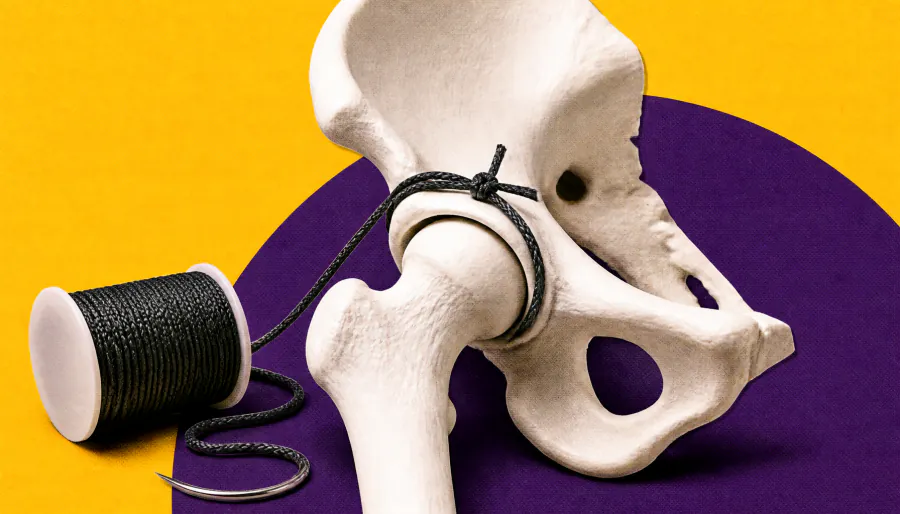
When a child's hip dislocates again after surgery, a second operation may still lead to a good outcome. A new study found that revision surgery for redislocation in children with hyperlaxity-associated developmental dysplasia of the hip (DDH) can successfully maintain hip reduction. Surgeons say the key is individualized, meticulous planning — not a one-size-fits-all approach.
When the first surgery doesn't hold, don't count the hip out. A retrospective study presented at the American Academy of Pediatrics National Conference found that revision surgery for redislocation after open hip reduction in children with hyperlaxity-associated developmental dysplasia of the hip (DDH) can still yield successful outcomes — challenging the long-held belief that redislocation signals a poor prognosis.
Researchers at Children's Hospital Los Angeles reviewed 13 hips in 10 children with syndromic hyperlaxity-associated DDH. While redislocation occurred in 30.7% of hips and subluxation in 15.4%, three patients who underwent revision surgery maintained hip reduction. At final follow-up, 84.6% of hips were reduced, with no acetabular dysplasia or proximal femoral growth disturbance detected.
By the Numbers:
Why it matters: For children with complex hip pathology, a failed first surgery isn't the end of the road. Surgeons are urged to assess all contributors to dislocation and tailor each surgical plan to the individual child — because with the right approach, a good outcome is still within reach.