Turn on cookies to sign in
Signing in saves your progress to your Curie account. We can only do that with cookies on — turn them on to continue.
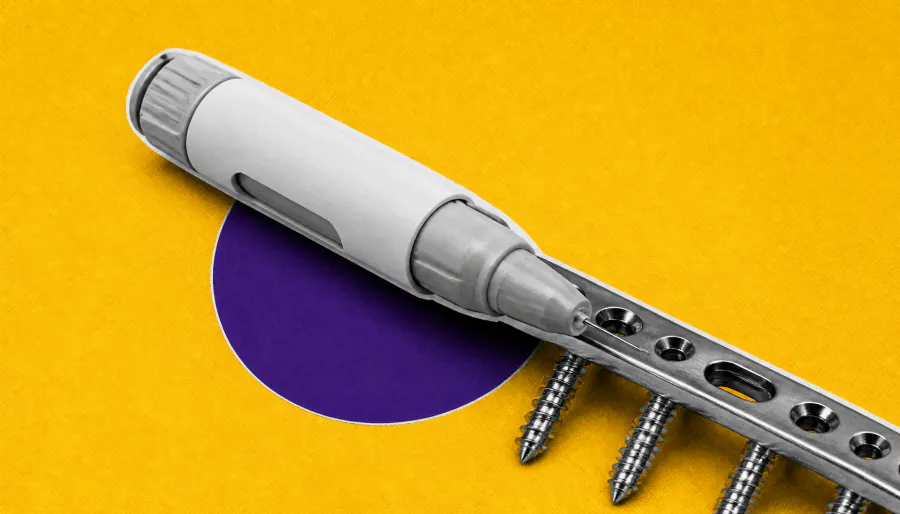
Worried about GLP-1s before emergency surgery? Don't be. A new study found that patients on GLP-1 receptor agonists who underwent hip fracture surgery had lower 90-day rates of pneumonia, readmission, ER visits, and death — with no increase in healing complications at one year. Researchers say there's no reason to delay hip fracture surgery for patients on these medications.
Hip fractures are a surgical emergency, typically requiring an OR visit within 24–48 hours. That timeline makes it nearly impossible to "wash out" chronic medications like GLP-1 receptor agonists — but a new study suggests that's perfectly fine. Researchers at Boston Medical Center found that patients on GLP-1s who underwent hip fracture fixation actually fared better in the short term than those not on the drugs.
Using the TriNetX database, the team propensity score-matched 1,240 GLP-1 users with 1,240 non-users, controlling for age, sex, BMI, comorbidities, and fracture type. Early concerns about nonunion risk disappeared after matching, suggesting the signal was driven by underlying comorbidities — not the drugs themselves.
By the Numbers:
Why it matters: These findings offer reassurance to surgeons and patients alike — being on a GLP-1 drug should not delay hip fracture surgery or raise concerns about postoperative outcomes.