Turn on cookies to sign in
Signing in saves your progress to your Curie account. We can only do that with cookies on — turn them on to continue.
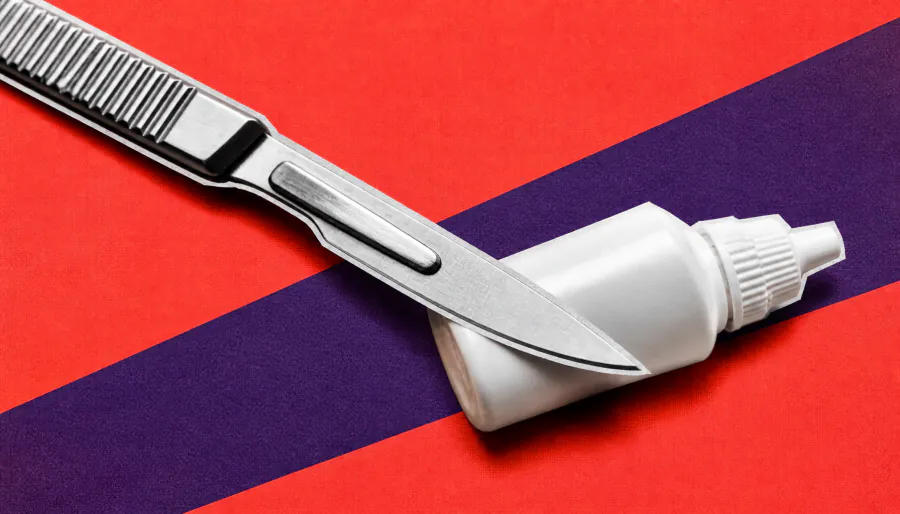
A new expert consensus is flipping the script on glaucoma management — procedures, not drops, should come first. The Interventional Glaucoma Working Group unanimously agreed that laser therapy, sustained-release drug implants, and minimally invasive surgery should lead treatment, with eye drops reserved as a bridge or supplement. The shift challenges the long-held assumption that drops are the "safe" default.
For decades, eye drops have been the go-to first line of defense against glaucoma — but a new expert consensus is challenging that norm. The Interventional Glaucoma Working Group has unanimously agreed on a new treatment framework that repositions drops as bridge or supplemental therapy, not the primary approach. Instead, the protocol calls for starting with procedural options: sustained-release drug implants, selective laser trabeculoplasty (SLT), and minimally invasive glaucoma surgery (MIGS), progressing to more involved interventions only as needed.
The shift is backed by solid evidence. The LiGHT trial showed SLT was more cost-effective than drops and achieved similar IOP control — and longer follow-up revealed that patients who started with laser had better visual field preservation over time, even when IOP levels were comparable between groups. Sustained-release implants (like iDose TR and Durysta) also sidestep the compliance and ocular surface issues that plague traditional topical therapy.
Key Takeaways:
Why it matters: Drops may seem like the conservative choice, but poor adherence and ocular surface damage can quietly drive disease progression. This consensus signals a meaningful paradigm shift toward more proactive, procedure-based glaucoma care.