Turn on cookies to sign in
Signing in saves your progress to your Curie account. We can only do that with cookies on — turn them on to continue.
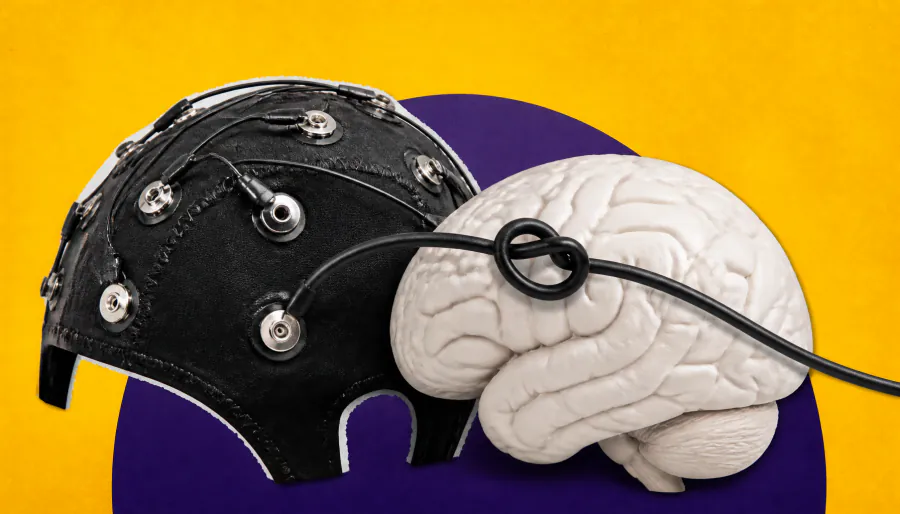
Scientists at McGill University have pinpointed a weakened beta-band brain signal that appears to connect several seemingly unrelated schizophrenia symptoms — from sensory processing issues to disorganized speech. The finding, published in Science Advances, suggests these symptoms may share a common neurological root, and could one day help detect psychosis earlier in at-risk youth.
Schizophrenia is notorious for its bewildering mix of symptoms — hallucinations, disorganized speech, movement difficulties — that researchers have long studied in isolation. Now, a team from McGill University may have found a common thread: a weakened beta-band brain signal that appears to underlie multiple distinct features of the disorder simultaneously.
Using high-resolution magnetoencephalography (MEG), researchers compared brain activity in 25 people with schizophrenia and 25 healthy controls during tasks testing sensory timing and speech. Those with schizophrenia showed slower, weaker beta-band activity — and the more pronounced the disruption, the worse their sensory processing, speech organization, and overall symptom severity.
Key Takeaways:
Why it matters: Schizophrenia's first signs often emerge in adolescence but go unrecognized for years. If confirmed in larger studies, measuring beta-band activity could become a practical tool for identifying at-risk youth earlier — and open new doors for targeted therapies.