Turn on cookies to sign in
Signing in saves your progress to your Curie account. We can only do that with cookies on — turn them on to continue.
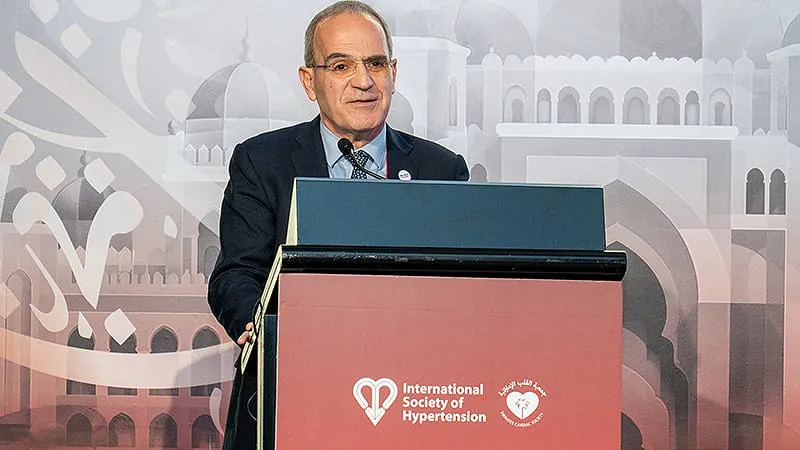
The International Society of Hypertension has released updated 2026 guidelines that split hypertension care into "essential" and "optimal" tiers — designed to work across both resource-limited and well-equipped healthcare systems. Key updates include revised BP targets, a new term for borderline readings, and a push to tackle the global implementation gap. An AI-powered app is also being launched to help clinicians apply the guidelines in real time.
The International Society of Hypertension (ISH) has unveiled its first updated global hypertension guidelines since 2020, presented at the ISH 2026 Scientific Meeting in Dubai and published in the Journal of Hypertension. The guidelines introduce a two-tier framework — "essential" care (the minimum standard for all settings) and "optimal" care (for better-resourced environments) — making them broadly applicable across diverse healthcare systems worldwide.
Key clinical updates include clearer BP targets, earlier treatment initiation, and a terminology shift: "high-normal" blood pressure is now called "elevated blood pressure" to prevent patients from fixating on the word "normal." Standardized 7-day home BP monitoring is now the preferred method for diagnosis, while cuffless devices are not recommended for clinical decisions. New drug classes and renal denervation are included under optimal care recommendations.
Key Takeaways:
Why it matters: Despite having the tools to control hypertension in ~95% of patients, the gap between guideline recommendations and real-world implementation remains vast. These globally inclusive guidelines — paired with a concrete 1-year action plan — aim to close that gap, particularly in lower-resource settings where hypertension management has historically lagged.