Turn on cookies to sign in
Signing in saves your progress to your Curie account. We can only do that with cookies on — turn them on to continue.
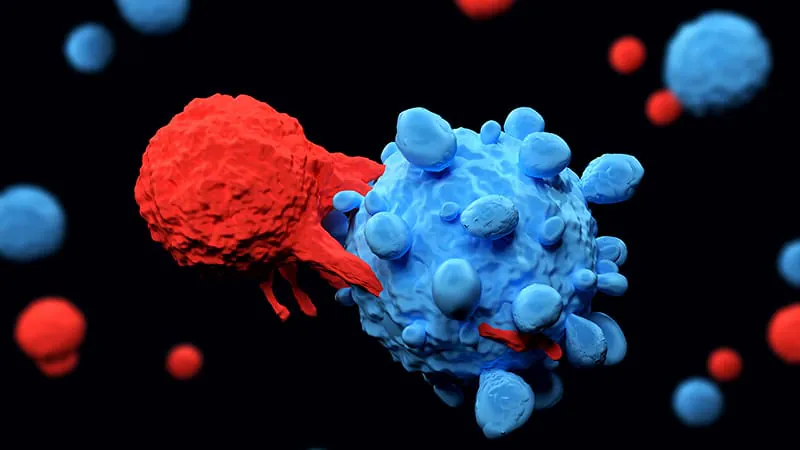
A clinical trial testing whether immune checkpoint inhibitors (ICIs) could be given less frequently was stopped early after patients on the reduced schedule died at nearly twice the rate of those on standard dosing. The MOIO trial, presented at ESMO 2026, found no meaningful reduction in side effects to justify the tradeoff. Experts say the findings underscore that ICI de-escalation can't be a one-size-fits-all strategy.
A clinical trial designed to test whether spacing out immune checkpoint inhibitor (ICI) therapy could ease the burden on cancer patients has been shut down early — and the results are a cautionary tale. The MOIO trial, presented at the ESMO Annual Meeting 2026 in Madrid, randomized 340 patients with advanced or metastatic solid tumors who had already responded to 6 months of standard ICI therapy. Half continued on their usual schedule; the other half switched to dosing every 3 months.
The outcome was stark: patients on the reduced schedule died at nearly twice the rate of those on standard dosing. And contrary to expectations, cutting back on treatment frequency didn't meaningfully reduce side effects either — undermining the core rationale for de-escalation.
By the Numbers
Why it matters: The trial's early termination sends a clear signal that blanket ICI de-escalation across tumor types is risky. Subgroup data hint that some cancers — like renal cell and head and neck — may tolerate reduced dosing better than others, such as lung and bladder cancers. Experts are calling for future trials to be tumor-specific and grounded in biology and pharmacology.