Turn on cookies to sign in
Signing in saves your progress to your Curie account. We can only do that with cookies on — turn them on to continue.
Machine learning is getting remarkably good at spotting neurological disease before it strikes. Studies presented at MSToronto 2026 showed that AI models analyzing health records, retinal scans, and blood samples can flag multiple sclerosis (MS) and neuromyelitis optica spectrum disorder (NMOSD) years before a formal diagnosis — and even identify which symptoms tend to show up first.
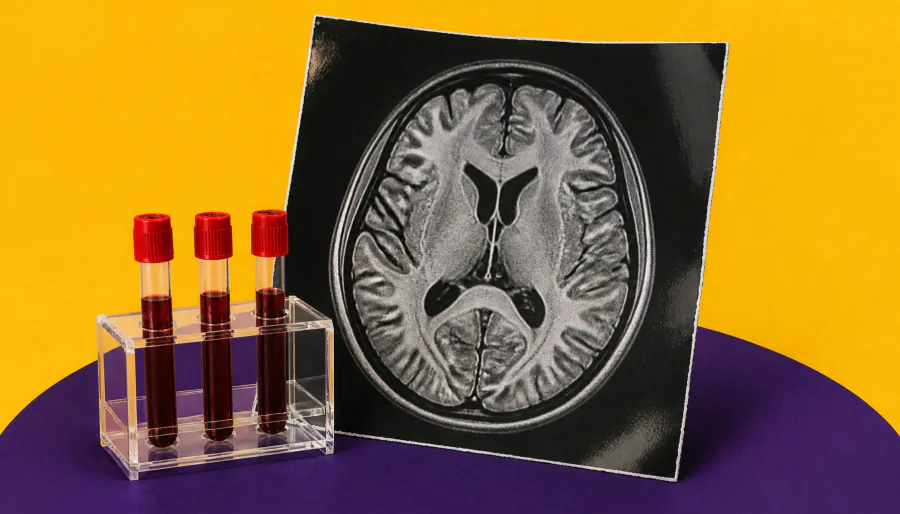
Machine learning is showing real promise in detecting neurological disease before it strikes. Studies presented at MSToronto 2026 showed that AI models analyzing electronic health records (EHRs), retinal imaging, and blood samples can flag multiple sclerosis (MS) and neuromyelitis optica spectrum disorder (NMOSD) years before a formal diagnosis. The research zeroes in on the "prodrome" — a pre-diagnosis window of vague symptoms and rising healthcare use that, it turns out, carries detectable biological signals.
For MS, a deep learning model trained on Stockholm primary care records achieved C-statistics of 0.80 at 1 year and 0.73 at 5 years before diagnosis. Top predictors included sensory symptoms, bladder dysfunction, psychiatric symptoms, and frequent healthcare visits — especially in younger women. For NMOSD, an AI-assisted analysis of 7 million UCSF patient records found that healthcare encounters more than doubled in the 5 years before diagnosis, with autoimmune conditions like lupus and Sjögren syndrome as key early markers.
By the Numbers:
Why it matters: These tools aren't ready for the clinic yet — researchers stress the need for prospective validation — but they represent a meaningful step toward catching MS and NMOSD early enough to intervene before irreversible damage sets in.