Turn on cookies to sign in
Signing in saves your progress to your Curie account. We can only do that with cookies on — turn them on to continue.
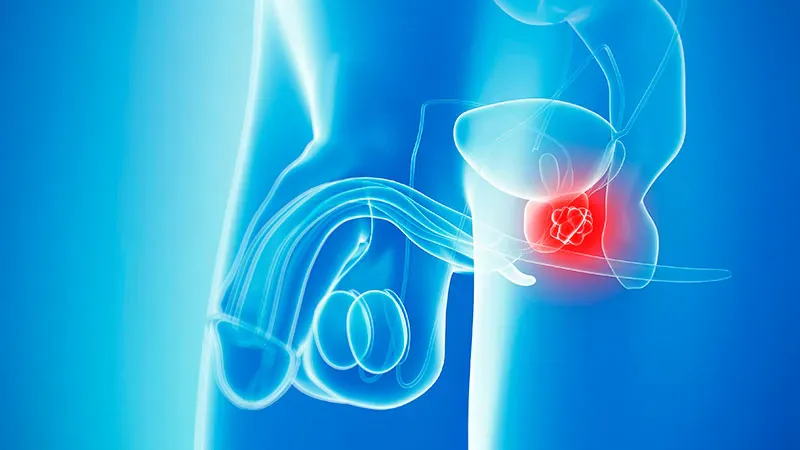
A phase 3 trial found that adding darolutamide to androgen deprivation therapy and radiation slashed the risk of metastasis or death by 58% in men with very high-risk localized prostate cancer. At 4 years, 95% of patients on darolutamide remained metastasis-free vs. 88% on placebo. Researchers say the results define a new treatment paradigm for this high-risk group.
The phase 3 DASL-HiCaP trial, presented at the 2026 ESMO Congress in Madrid, showed that adding darolutamide (Nubeqa) to standard androgen deprivation therapy (ADT) and radiation therapy (RT) significantly improved outcomes in men with very high-risk localized prostate cancer. The trial enrolled 1,106 patients who had undergone radical or salvage radiation therapy and were randomized to receive darolutamide 600 mg twice daily or placebo for 96 weeks alongside ADT and RT.
The results were striking: darolutamide reduced the risk of metastasis or death by 58%, with consistent benefits seen across subgroups — including those with or without pelvic node involvement. Lead investigator Dr. Tamim Niazi of McGill University called the findings a "new paradigm" for curative-intent treatment in this population. The safety profile was reassuring, with no new signals emerging.
By the Numbers:
Why it matters: These findings could reshape how oncologists approach very high-risk prostate cancer, particularly for patients with node-positive disease or high Gleason scores. However, experts caution that questions remain around which node-negative patients truly benefit, and future trials should incorporate modern imaging and biomarkers to guide treatment intensification — and avoid overtreatment.