Turn on cookies to sign in
Signing in saves your progress to your Curie account. We can only do that with cookies on — turn them on to continue.
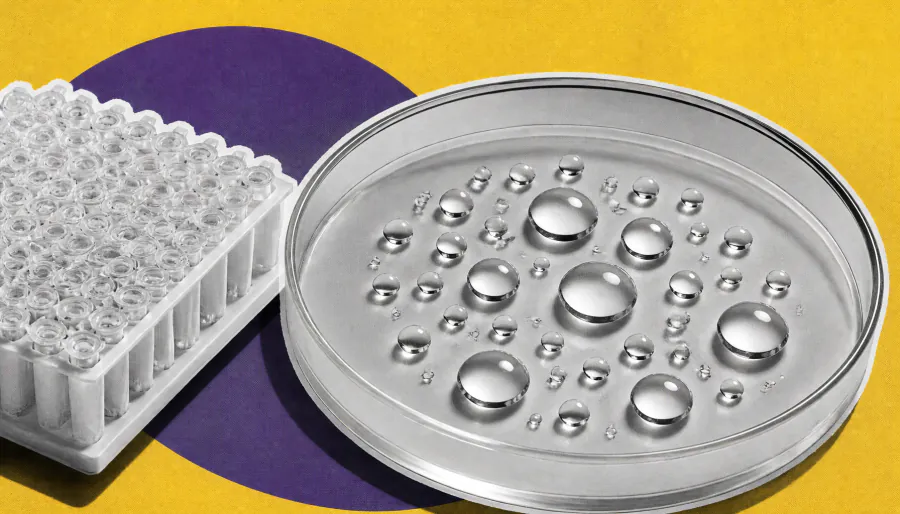
Scientists have discovered that mimicking the crowded interior of a living cell can help control how synthetic DNA droplets form and organize. Using polymeric crowding agents like PEG, researchers from Science Tokyo were able to tune droplet size, stability, and arrangement. The findings could pave the way for programmable artificial cell systems and molecular computing networks.
Scientists at Science Tokyo have found that macromolecular crowding — the phenomenon where a cell's interior is packed with large molecules — can be harnessed as a powerful design tool for engineering synthetic DNA droplets. Using Y-shaped DNA nanostructures called "nanostars" and polymeric crowding agents, the team showed that recreating a cell-like crowded environment dramatically influences how these droplets form, stabilize, and organize.
The key insight: adding crowding agents like polyethylene glycol (PEG), dextran, or Ficoll caused DNA droplets to form at significantly higher temperatures than without them, and PEG proved the most effective. Crucially, crowding alone wasn't enough — the DNA nanostars still needed their "sticky ends" (short complementary sequences) to interact and assemble. By tweaking PEG concentration, nanostar ratios, and salt levels, researchers could orchestrate complex multi-droplet patterns, from alternating networks to structures containing up to three distinct nanostar types.
By the Numbers:
Why it matters: These findings reframe macromolecular crowding not just as a cellular quirk, but as an engineering lever. The ability to program synthetic DNA condensates could accelerate development of artificial cell tissues, molecular communication networks, and even molecular computing systems.