Turn on cookies to sign in
Signing in saves your progress to your Curie account. We can only do that with cookies on — turn them on to continue.
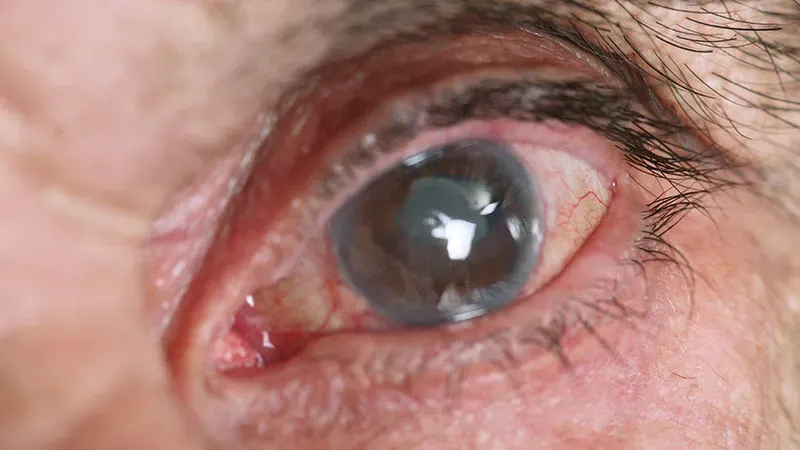
A large retrospective study found that patients taking TNF-alpha inhibitors — common anti-inflammatory drugs — had a 30% lower risk of developing primary open-angle glaucoma (POAG) compared to those who didn't use them. They were also less likely to need laser treatment or eye pressure-lowering drops. The findings point to neuroinflammation as a potential driver of glaucoma development.
Anti-inflammatory drugs may offer an unexpected shield against glaucoma
A large retrospective study published in the American Journal of Ophthalmology suggests that TNF-alpha inhibitors — drugs widely used for autoimmune conditions like rheumatoid arthritis and Crohn's disease — may also reduce the risk of developing primary open-angle glaucoma (POAG), the most common form of glaucoma.
Researchers analyzed electronic health records from over 70 U.S. healthcare organizations, comparing nearly 12,000 TNF-alpha inhibitor users to a matched control group. Over a follow-up period of up to 10 years, users of these drugs were significantly less likely to be diagnosed with POAG, undergo laser eye surgery, or be prescribed eye pressure-lowering drops.
By the Numbers:
Why it matters: These findings support the idea that neuroinflammation plays a key role in glaucoma development — opening a potential new avenue for prevention. However, since TNF-alpha inhibitors carry serious systemic side effects, experts caution that clinical use for glaucoma prevention isn't ready for prime time yet.