Turn on cookies to sign in
Signing in saves your progress to your Curie account. We can only do that with cookies on — turn them on to continue.
A landmark study from Yale found that autistic children's brains process faces less distinctly than neurotypical peers — and the neural differences kick in earlier than previously thought. Using full-scalp EEG and machine learning on ~400 kids, researchers found face-specific brain signals don't sharpen with age in autistic children the way they do in neurotypical ones. The findings could open doors to earlier diagnosis and better-targeted support.
A major new study published in Nature Mental Health is reshaping what scientists know about how autistic children's brains handle faces. Researchers at Yale, analyzing EEG data from roughly 400 autistic and neurotypical children, found that brain signals tied to face recognition are less distinct in autistic kids — and unlike neurotypical children, those signals don't sharpen with age.
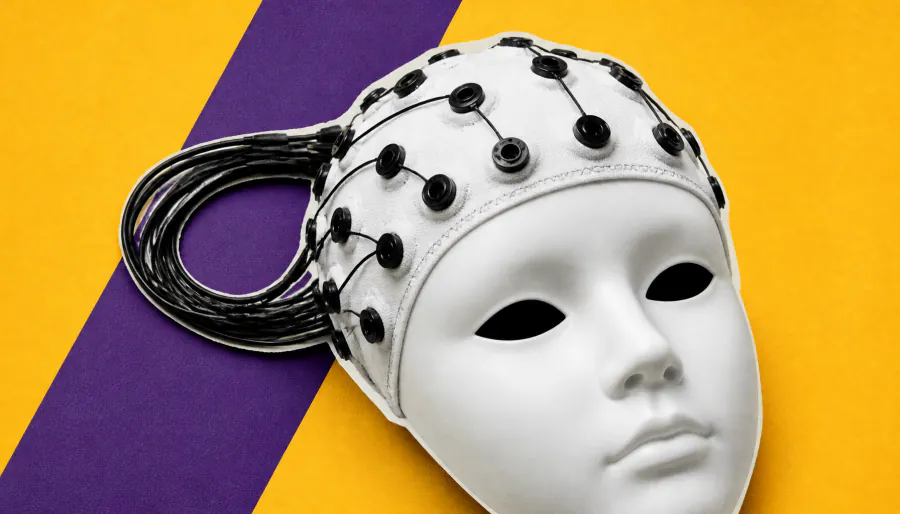
The team used a full-scalp approach (128 electrodes) paired with machine learning, moving beyond the narrow, single-region EEG methods used in most prior research. Crucially, they found that differences in face processing emerge before the well-known N170 brain signal — a marker occurring ~170ms after seeing a face — suggesting autism-related differences arise at even earlier stages of visual processing than previously established.
Key Takeaways:
Why it matters: This research challenges the assumption that face-processing differences in autism are primarily behavioral or experiential. By pinpointing earlier, neurologically rooted differences, it lays the groundwork for more objective diagnostic tools and earlier, more appropriate interventions.