Turn on cookies to sign in
Signing in saves your progress to your Curie account. We can only do that with cookies on — turn them on to continue.
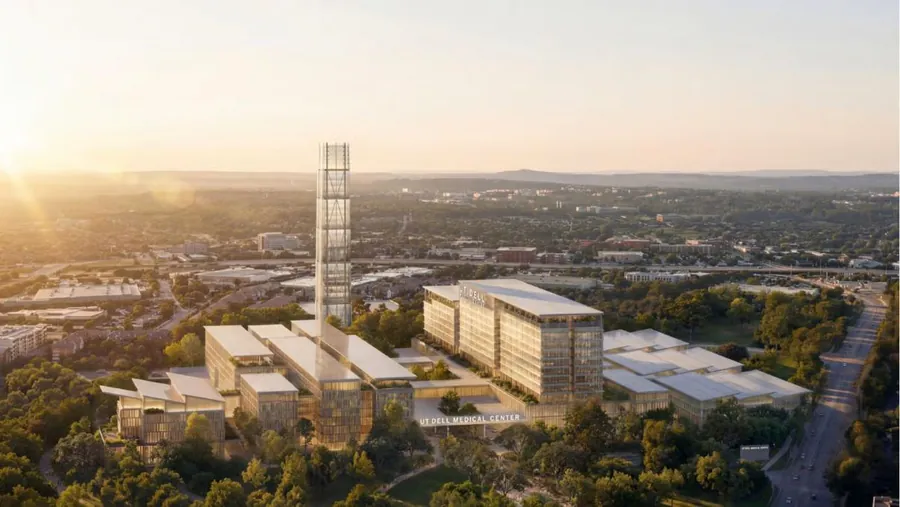
The University of Texas at Austin has unveiled UT Dell Medicine, a new unified academic health system, alongside plans for a $5 billion AI-native medical center set to open in 2030. The facility will be built from the ground up with robotics, 20,000–30,000 sensors, supercomputing, and AI tools woven into its infrastructure. The goal: keep complex-care patients in Texas and redesign the academic hospital for the next 50 years.
The University of Texas at Austin has officially launched UT Dell Medicine, a unified academic health system that brings together Dell Medical School, its existing clinical practices, and the upcoming UT Dell Medical Center under one banner. It will operate as Austin's only academic health system, alongside HCA Healthcare, Baylor Scott & White, and Ascension Seton.
The centerpiece is a $5 billion, AI-native medical center slated to open in 2030 on a 27-acre campus in Northwest Austin. Anchored by a $750 million gift from the Michael & Susan Dell Foundation and developed in partnership with UT MD Anderson Cancer Center, the facility will focus on cardiovascular, cancer, neurological, transplant, and advanced critical care — areas where Austin currently sees significant patient outmigration to other cities. The hospital is being designed from scratch to embed AI, robotics, and advanced computing into every layer of care, from automated medication delivery to real-time bedside data analysis using supercomputing.
By the Numbers:
Why it matters: Building a hospital "AI-native" from the ground up — rather than retrofitting existing infrastructure — could set a new benchmark for how academic medical centers integrate technology, train physicians, and deliver complex care at scale.