Turn on cookies to sign in
Signing in saves your progress to your Curie account. We can only do that with cookies on — turn them on to continue.
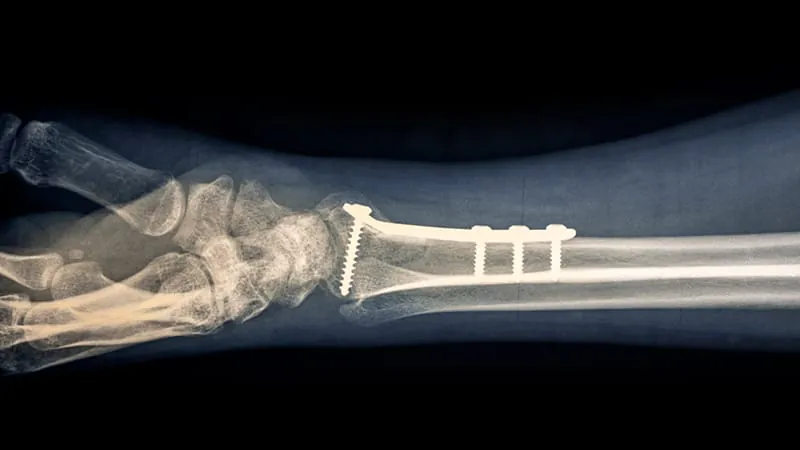
Postoperative infections after volar locking plate fixation of distal radius fractures are exceedingly rare, a new study finds. Out of 474 patients, only one superficial infection was recorded — a 0.2% overall rate. Despite this, surgeons showed significant variation in whether they used preventive antibiotics, raising questions about standardizing care.
A new retrospective study out of Uppsala University, Sweden, found that postoperative infections following volar locking plate fixation of closed distal radius fractures are extremely uncommon. Across 474 consecutive patients treated between 2022 and 2024, just one superficial infection was identified — and zero deep infections or infection-related reoperations occurred within the one-year follow-up window.
What's notable, though, is how differently surgeons approached antibiotic prophylaxis. Half the patients received a single pre-operative IV dose of flucloxacillin (or clindamycin for penicillin-allergic patients), while the other half received nothing — purely based on surgeon preference. More experienced surgeons were actually less likely to prescribe prophylaxis, while patients with higher health complexity (higher ASA class) were more likely to receive it.
By the Numbers:
Why it matters: With infection rates this low, the study can't definitively say whether antibiotics make a difference — but it highlights a real inconsistency in surgical practice. Clearer, evidence-based guidelines on perioperative antibiotic use for this common procedure could help standardize care and reduce unnecessary medication use.