Turn on cookies to sign in
Signing in saves your progress to your Curie account. We can only do that with cookies on — turn them on to continue.
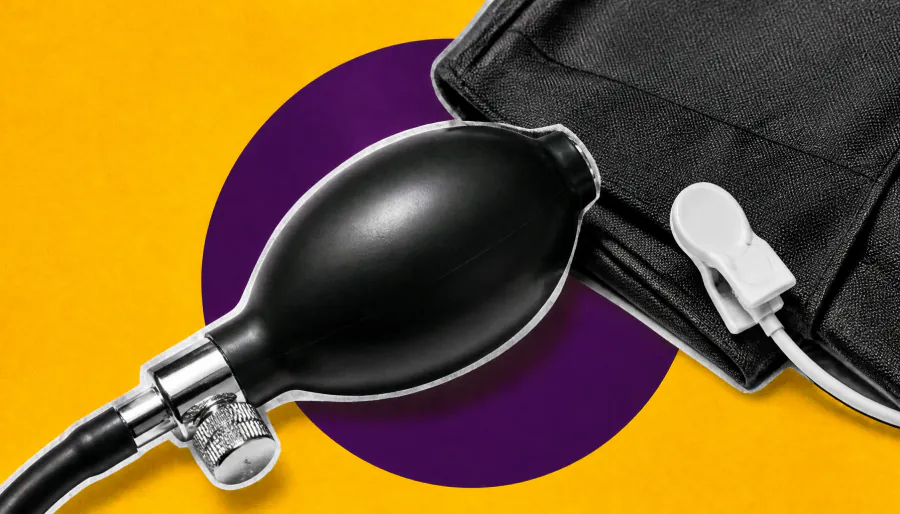
A small clip-on ear device that delivers gentle electrical pulses was tested in a clinical trial for stubborn high blood pressure. While it didn't outperform a placebo overall, patients with more severe hypertension saw meaningful blood pressure reductions. Researchers say larger trials are needed before drawing firm conclusions.
A noninvasive ear-stimulation device may offer a new avenue for treating hard-to-control high blood pressure — at least for some patients. In the SCRATCH-HTN trial, 63 adults with uncontrolled hypertension (already on medication) were randomly assigned to either an active transcutaneous autonomic neuromodulation (tAN) device or a sham version. Participants clipped the device onto the tragus of each ear and self-administered 30-minute sessions daily for two weeks, then weekly for 10 weeks.
Overall, the device did not significantly outperform the sham — systolic blood pressure dropped 3.15 mmHg in the active group vs. 5.50 mmHg in the sham group. However, a pre-planned subgroup analysis told a different story for patients with more severe hypertension, who showed a notably greater reduction with the active device.
By the Numbers:
Why it matters: Hypertension remains a leading driver of heart attacks and strokes, and many patients can't get their readings under control even with medication. A safe, home-use, non-surgical device could be a meaningful addition to the toolkit — if larger trials confirm these early signals.