Curie Brief
Turn on cookies to sign in
Signing in saves your progress to your Curie account. We can only do that with cookies on — turn them on to continue.
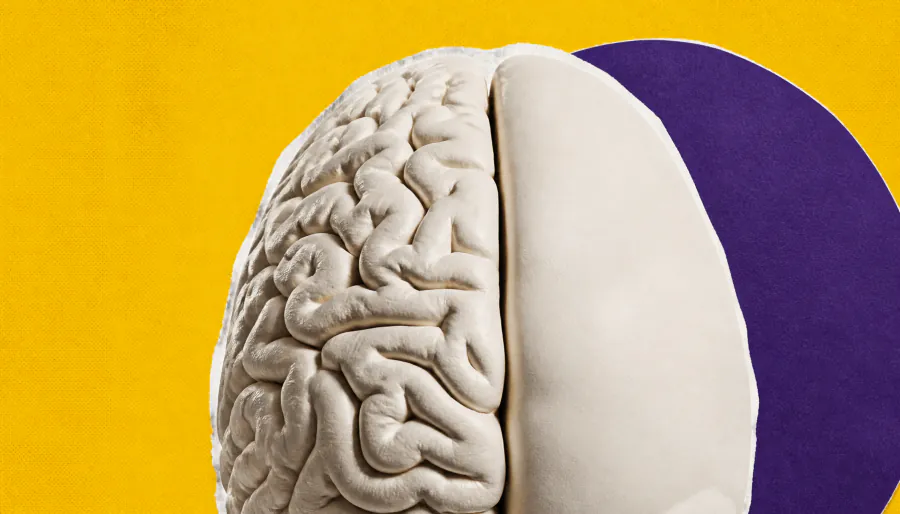
Smooth brains, explained. Scientists at the German Primate Center have figured out why common marmosets — unlike most primates — have small, nearly wrinkle-free brains. Using brain organoids, they found that marmoset neural progenitor cells divide more slowly, have simpler structures, and have a shorter window for rapid growth — all of which add up to fewer neurons and less folding. The findings could shed light on human brain development disorders.
Smooth brains, explained
Most primates, including humans, have large, heavily folded brains — those characteristic ridges and grooves that pack billions of neurons into a compact space. Common marmosets are a striking exception: their brains are almost entirely smooth. Now, scientists at the German Primate Center (DPZ) have pinpointed the cellular reasons why, publishing their findings in Science Advances.
Using brain organoids grown from both human and marmoset cells, the team zeroed in on neural progenitor cells — the brain's neuron-making factories. They found not one, but several compounding differences: marmoset progenitor cells divide more slowly, have simpler structures with fewer branching processes, and operate within a shorter overall window of rapid proliferation. The result? Far fewer neurons, and a much smoother cortex.
Key Takeaways
Why it matters: Beyond explaining a quirk of primate evolution, this research lays groundwork for understanding what goes wrong in human brain development disorders — conditions where neuron production or cortical folding is disrupted.