Curie Brief
Turn on cookies to sign in
Signing in saves your progress to your Curie account. We can only do that with cookies on — turn them on to continue.
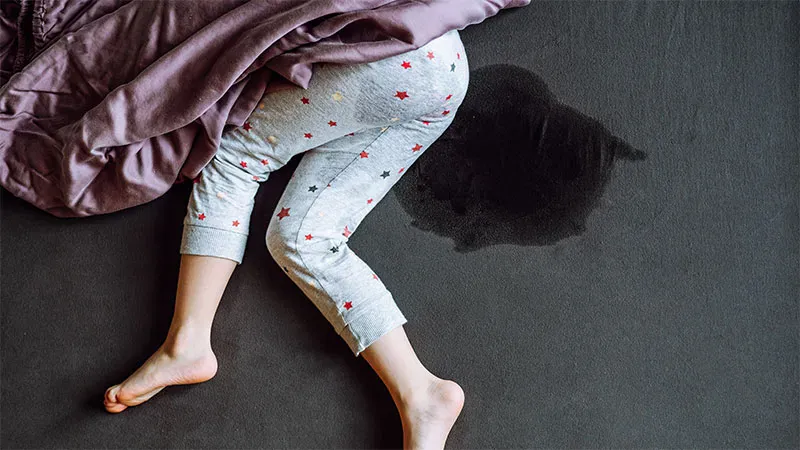
Bedwetting affects about 1 in 3 five-year-olds and is the second most common childhood condition after allergies — yet it's still widely misunderstood. Experts say it's almost never a parenting failure, but rather a delay in biological maturation. Urotherapy, a nonsurgical, nonpharmacologic approach, is the cornerstone of treatment and should be the first step for all forms of the condition.
Bedwetting is far more common than many parents realize — affecting roughly 1 in 3 five-year-olds — yet it remains a social taboo that often delays families from seeking help. Urotherapists from the University Medical Center Mannheim break down the key distinctions clinicians need to know: enuresis (nighttime wetting) vs. daytime urinary incontinence, and primary (never been dry) vs. secondary (relapse after 6+ dry months) forms. Boys are affected twice as often as girls, and in most cases, the root cause is a benign delay in biological maturation — not laziness or poor parenting.
Before any treatment begins, clinicians should rule out organic causes through a structured workup including questionnaires, voiding/fluid logs, physical exam, and ultrasound. Once organic causes are excluded, urotherapy — covering education, voiding habits, fluid intake guidance, symptom tracking, and follow-up — is the first-line approach for all forms.
Key Takeaways:
Why it matters: Misconceptions about bedwetting lead to shame, delayed care, and counterproductive responses like punishment. Clinicians play a critical role in normalizing the condition and guiding families toward evidence-based, patient-centered management.