Curie Brief
Turn on cookies to sign in
Signing in saves your progress to your Curie account. We can only do that with cookies on — turn them on to continue.
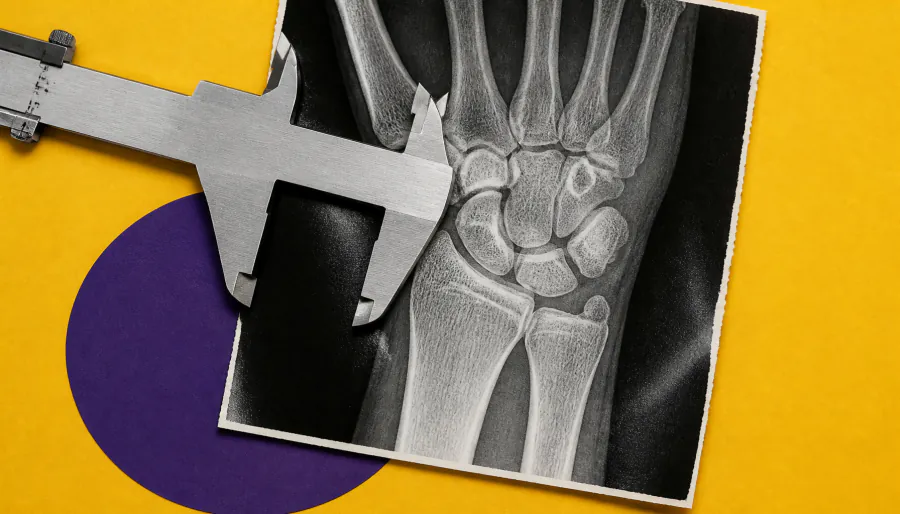
A new international registry is helping set realistic recovery expectations after scapholunate ligament surgery. Patients typically experience a dip in function and pain right after cast removal at 6 weeks, but see meaningful improvement by 3 months and are better off than before surgery by 12 months. Key radiographic markers — not the commonly used scapholunate gap — may be the best predictors of good outcomes.
A new international registry tracking outcomes after scapholunate ligament surgery is giving surgeons and patients a clearer picture of what recovery actually looks like. Researchers from 15 centers across the U.S. and internationally followed 70 patients who underwent either scapholunate ligament repair or reconstruction, collecting data on pain, wrist range of motion, grip strength, and radiographic parameters at multiple time points over a year.
The findings reveal a predictable — but initially discouraging — recovery curve: patients feel worse when their casts come off at 6 weeks, but pain and function improve significantly by 3 months and surpass pre-surgery levels by 12 months. Both repair and reconstruction groups showed similar long-term outcomes, though the anatomic front-and-back reconstruction group had slightly better disability scores at 6 months before the two groups converged at one year.
Key Takeaways:
Why it matters: This registry gives surgeons a standardized benchmark to identify patients who aren't recovering on track — and decide whether to intervene or simply reassure. For patients, it sets honest expectations about a tough early recovery period with a promising long-term outlook.