Curie Brief
Turn on cookies to sign in
Signing in saves your progress to your Curie account. We can only do that with cookies on — turn them on to continue.
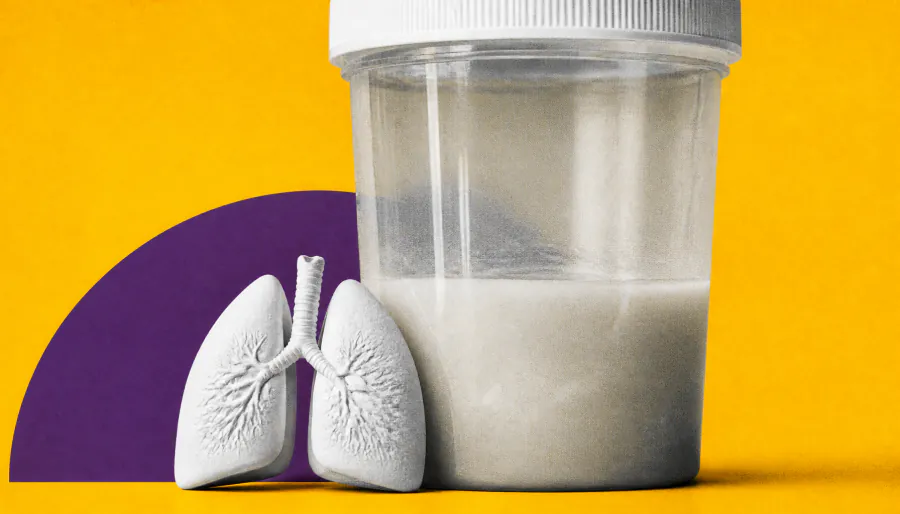
The greener the sputum, the worse the inflammation. A post hoc analysis of the ASPEN trial found that patients with bronchiectasis who had purulent (green) sputum had significantly higher levels of neutrophil serine proteases — key markers of airway inflammation — compared to those with clearer sputum. The drug brensocatib reduced these inflammatory markers across all sputum color groups.
It turns out the color of a patient's mucus can tell clinicians a lot. A post hoc analysis of the phase 3 ASPEN trial, presented at the CHEST Annual Meeting, found that bronchiectasis patients with purulent (green) sputum had dramatically higher levels of neutrophil serine proteases (NSPs) — including neutrophil elastase, cathepsin G, and proteinase 3 — compared to those with mucopurulent (yellow) or mucoid (clear/white) sputum. These NSPs are key drivers of airway inflammation and lung damage.
Beyond inflammation markers, greener sputum was also linked to more frequent exacerbations, worse lung function, higher CT scores, and greater use of macrolides and inhaled steroids — painting a clear picture of more severe disease.
By the Numbers:
Why it matters: Sputum color is a free, patient-reported, daily biomarker that can reliably identify who has the most neutrophilic inflammation — and who may benefit most from targeted therapies like brensocatib.