Curie Brief
Turn on cookies to sign in
Signing in saves your progress to your Curie account. We can only do that with cookies on — turn them on to continue.
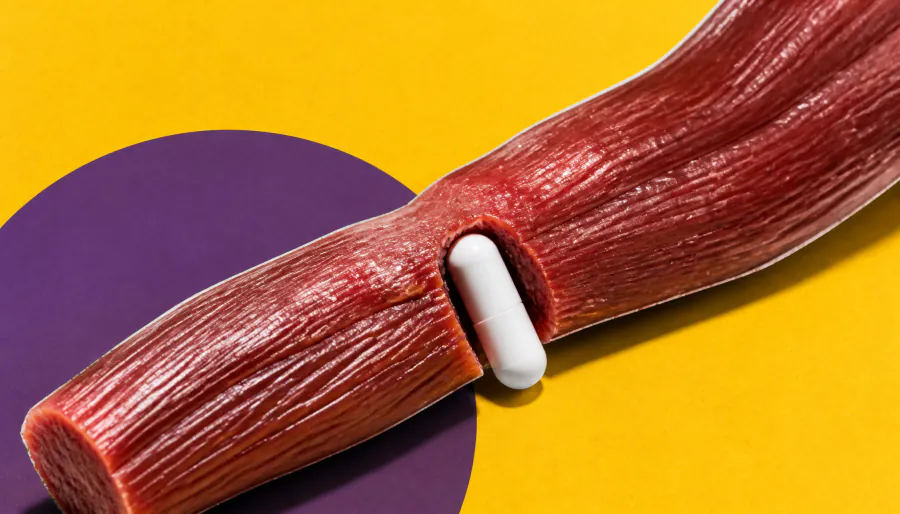
Statins save millions of lives, but muscle pain drives many patients to quit them. Now, researchers at UBC have pinpointed exactly why: statins force open a calcium channel in muscle cells, causing a damaging leak. The discovery could pave the way for next-generation statins with the same heart-protecting power — minus the muscle side effects.
Statins are cardiovascular medicine's greatest hits — they've helped prevent countless heart attacks and strokes. But for some of the 200+ million people who take them, muscle pain, weakness, and fatigue are real enough to make them stop treatment altogether. Now, scientists at the University of British Columbia (UBC) and the University of Wisconsin-Madison think they've finally cracked the case.
Using cryo-electron microscopy — an imaging technique so precise it can reveal near-atomic detail — the team zeroed in on a protein called the ryanodine receptor (RyR1), which controls calcium flow in muscle cells. They found that statin molecules latch onto this protein in an unusual way: three molecules pile into a specific pocket, wedging the calcium channel open and causing a continuous, damaging leak into surrounding muscle tissue. Atorvastatin was the primary drug studied, but the researchers believe similar interactions likely occur across the statin family. The findings were published in Nature Communications.
Key Takeaways:
Why it matters: Muscle side effects are one of the top reasons patients discontinue statins — putting them at greater risk for heart attacks and strokes. A statin that protects the heart without the muscle complications could help far more patients stay on life-saving therapy.