Curie Brief
Turn on cookies to sign in
Signing in saves your progress to your Curie account. We can only do that with cookies on — turn them on to continue.
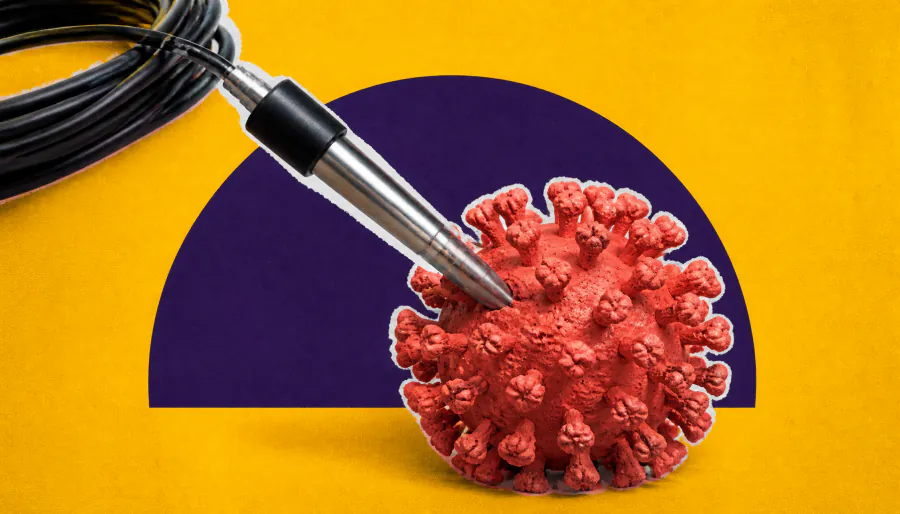
Scientists have introduced a groundbreaking "Raman genome" concept that uses molecular vibration fingerprints to distinguish between 20 SARS-CoV-2 variants — no full RNA sequencing required. By encoding these spectral signatures as "Raman barcodes," researchers successfully differentiated all strains, including multiple Omicron subvariants. The approach could enable rapid viral screening during outbreaks and emergencies.
Researchers at Kansai Medical University in Japan have unveiled a novel concept called the "Raman genome" — a spectroscopic approach that captures the molecular vibration fingerprints of viral RNA to rapidly identify different viral variants. Published in Advanced Science, the study demonstrates that Raman spectroscopy can detect subtle structural differences in RNA that go beyond simple nucleotide sequences, offering a potentially faster alternative to traditional RNA sequencing.
The team extracted RNA from 20 SARS-CoV-2 strains — including Alpha, Beta, Delta, and 12 Omicron subvariants — and encoded their unique spectral features into "Raman barcodes." Remarkably, even strains with nearly identical nucleotide compositions showed distinctly different Raman fingerprints, proving the method is sensitive to RNA's three-dimensional structure, not just its genetic letters.
Key Takeaways:
Why it matters: Traditional viral variant tracking is slow, equipment-heavy, and computationally intensive. A Raman-based approach could deliver rapid, accessible variant identification during outbreaks or in emergency care settings — potentially reshaping how the world responds to emerging infectious threats.