Curie Brief
Turn on cookies to sign in
Signing in saves your progress to your Curie account. We can only do that with cookies on — turn them on to continue.
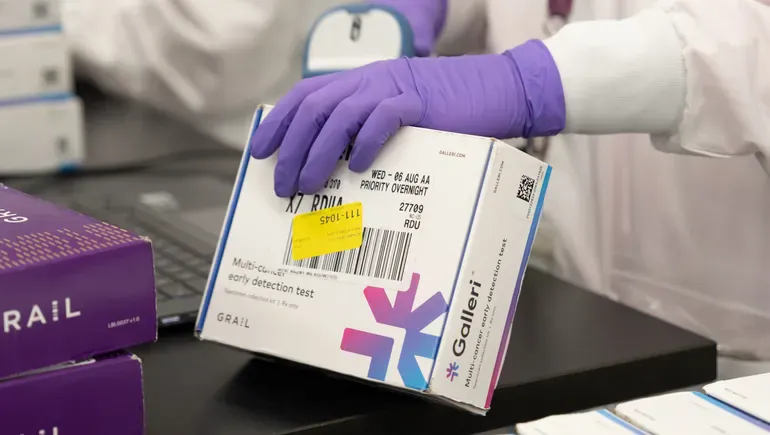
Grail's Galleri test — a single blood draw that screens for 50+ cancers — is on the cusp of FDA approval after an advisory panel backed it 6-4 on effectiveness. Five cancer specialists break down what's promising (finding unscreenable cancers early) and what's not (it still misses more than half of all cancers and has no proven mortality benefit). The bottom line: it's a complement to existing screenings, not a replacement.
Grail's Galleri multicancer early detection (MCED) test is inching toward FDA approval after the agency's advisory panel voted 6-4 that it's effective and 7-2 that its benefits outweigh its risks. The test analyzes cell-free DNA methylation patterns from a single blood draw to flag signals across 50+ cancer types and predict where the signal originates — guiding follow-up imaging or biopsy. It's designed for adults 50 and older and is meant to supplement, not replace, standard screenings.
Cancer specialists are cautiously optimistic but clear-eyed about the gaps. The test shines brightest for cancers with no existing screening options — pancreatic, ovarian, esophageal — catching 75–90% of some of those. But it struggles with breast and prostate cancers (sensitivity below 25% and 11%, respectively), and the landmark NHS-Galleri randomized trial failed to meet its primary endpoint of reducing late-stage cancer diagnoses. No study has yet shown the test saves lives.
Key Takeaways:
Why it matters: With over 595,000 commercial tests already sold, Galleri is already reshaping cancer screening conversations. FDA approval would accelerate insurance coverage and broader adoption — making it critical for clinicians to counsel patients that this test adds to, but does not replace, proven screenings like mammograms and colonoscopies.