Curie Brief
Turn on cookies to sign in
Signing in saves your progress to your Curie account. We can only do that with cookies on — turn them on to continue.
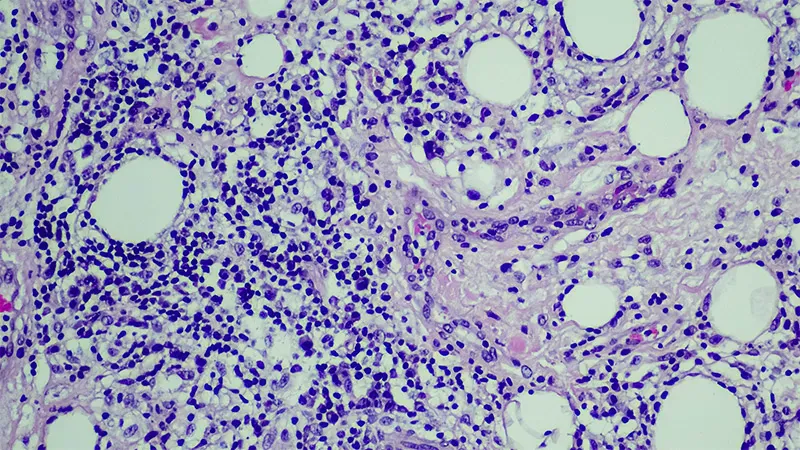
After years of rising rates, cutaneous T-cell lymphoma (CTCL) cases in the US started declining after 2015 — a trend that's puzzling researchers. A new SEER-based analysis suggests the widespread use of biologic drugs, especially dupilumab, may actually be protective rather than harmful. The findings flip the script on longstanding concerns that these therapies could trigger lymphoma.
For years, dermatologists assumed cutaneous T-cell lymphoma (CTCL) was on a steady upward climb — but a new analysis says otherwise. A study published in the Journal of the American Academy of Dermatology found that while US CTCL incidence rose from 2000 to 2015, it reversed course sharply after that, declining at a rate of 2.86% per year through 2022. The shift surprised even the researchers behind it.
The analysis drew on nearly 25,000 confirmed CTCL cases from the SEER-21 registry. The declines were most pronounced among non-Hispanic White patients, those aged 40 and older, and people in higher-socioeconomic-status areas. Most CTCL subtypes followed the downward trend, though Sézary syndrome bucked it with a 4.2% rise over the study period.
The timing of the decline — coinciding with the rise of dupilumab for atopic dermatitis — has sparked a provocative hypothesis: rather than causing lymphoma, IL-4/IL-13 blockade may actually suppress malignant T-cell growth. Researchers caution this is correlation, not causation, and call for longitudinal studies linking biologic exposure to individual patient outcomes.
Key Takeaways:
Why it matters: This study reframes a heated debate in dermatology. If biologics like dupilumab are protective — or at least not harmful — it could ease clinical anxiety around prescribing these drugs to patients with atopic dermatitis who are at risk for CTCL.