Curie Brief
Turn on cookies to sign in
Signing in saves your progress to your Curie account. We can only do that with cookies on — turn them on to continue.
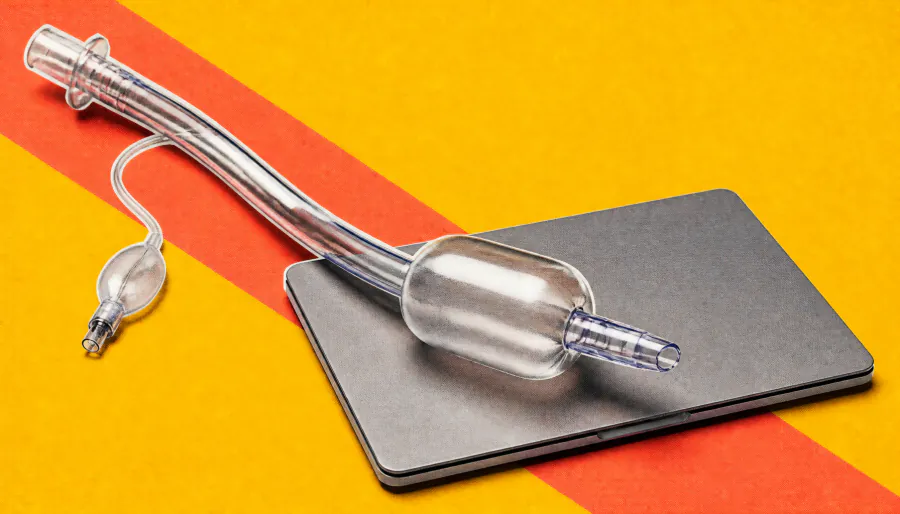
Standard breathing checks aren't enough to predict who's safe to come off a ventilator. A new machine learning model flagged nearly 1 in 5 ventilated patients as high-risk for extubation failure — even though they passed all traditional criteria. These "occult high-risk" patients had nearly double the reintubation and mortality rates of truly low-risk patients.
Passing a spontaneous breathing trial doesn't mean every patient is equally ready to leave the ventilator — and a new machine learning model is proving just that. Researchers analyzed data from over 23,000 mechanically ventilated adults and found that 18.7% of patients who met all traditional low-risk extubation criteria were actually flagged as high-risk by the AI model. These "occult high-risk" patients had reintubation and mortality rates nearly double those of truly low-risk patients.
The model, trained on 52 pre-extubation features using gradient boosting, identified six key predictors of failure that traditional metrics miss: ventilation duration, ARDS diagnosis, PaO2, pneumonia, body weight, and SpO2. Traditional criteria — FiO2, PEEP, and rapid shallow breathing index (RSBI) — simply don't capture the full clinical picture.
By the Numbers:
Why it matters: Extubation failure doubles a patient's risk of death, and current bedside tools are leaving high-risk patients undetected. This model could serve as a real-time EHR decision-support tool — helping clinicians intervene earlier with targeted diuresis or post-extubation support, while also avoiding unnecessarily prolonged ventilation in over-flagged patients.