Curie Brief
Turn on cookies to sign in
Signing in saves your progress to your Curie account. We can only do that with cookies on — turn them on to continue.
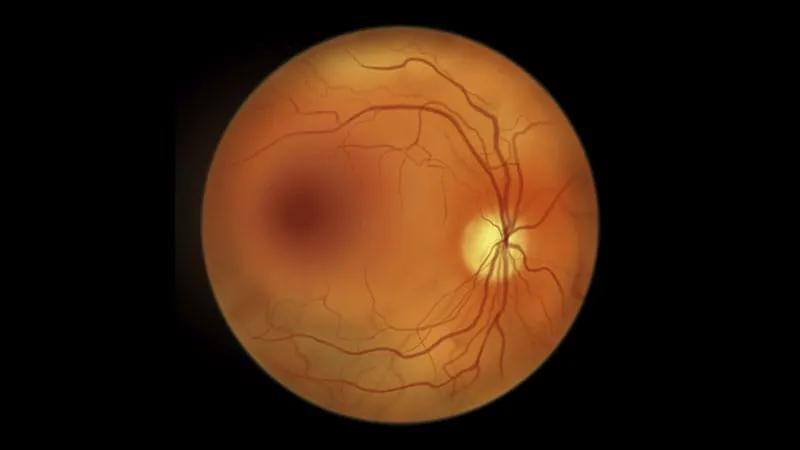
A new intravitreal drug could shake up uveitis treatment. Vamikibart, an investigational IL-6 inhibitor, showed rapid vision improvements as early as day 8 in two phase 3 trials — and those gains held for up to a year. The catch? Results were inconsistent between dose levels, leaving some questions unanswered before a potential approval.
A new intravitreal drug could shake up uveitis treatment. Vamikibart, an investigational anti-IL-6 monoclonal antibody, could become the first nonsteroidal intravitreal treatment for uveitic macular edema. Presented at the AAO 2026 Annual Meeting, results from the twin phase 3 MEERKAT and SANDCAT trials showed that patients experienced rapid vision improvements as early as day 8 — gains that persisted through 52 weeks. About 20% of vamikibart-treated patients needed rescue treatment, compared to ~50% in the sham group.
However, the trials produced inconsistent results between dose levels. In MEERKAT, the 1-mg dose outperformed the 0.25-mg dose, but in SANDCAT, the lower dose did better — raising questions about the drug's dose-response relationship. Anatomic improvements (reduced retinal thickness) were statistically significant in both trials at both doses, but these didn't always translate to equivalent visual acuity gains.
By the Numbers:
Why it matters: Uveitic macular edema is currently managed largely with corticosteroids, which carry risks like steroid-induced glaucoma. A well-tolerated nonsteroidal option with durable effects could meaningfully expand treatment choices — especially for steroid-vulnerable patients.